
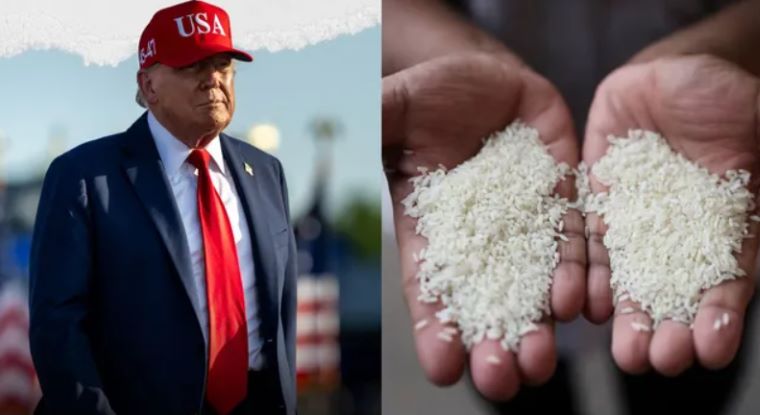
Trump’s New Tariff Threat on Indian Rice: What It Means for India and Global Trade
United States President Donald Trump has warned that his administration may impose new tariff threat on rice imported from India, accusing Indian exporters of “dumping” cheap rice into the American market. The statement has triggered reactions across global trade circles, especially within India’s agricultural and export sectors. The threat came at a time when trade negotiations between the two nations were already sensitive, making the announcement even more significant.
Trump’s remarks were aimed at addressing concerns raised by American farmers, who claim that low-priced imported rice is hurting domestic producers. His message suggested that tariffs would be the quickest way to “fix” the issue, hinting at the possibility of formal trade action. This potential tariff move also aligns with broader political and economic pressures in the U.S., where agriculture often plays a key role in election-year policies.
Immediate Impact on Indian Markets
The moment news of the tariff threat surfaced, shares of major Indian rice-exporting companies fell sharply in the stock market. Investors reacted strongly to fears that the U.S. could become a less profitable destination for Indian exporters. Some rice companies saw double-digit percentage drops in their stock value, reflecting the uncertainty surrounding future trade.
Exporters expressed concern, noting that any new tariff could reduce competitive advantage in the U.S. market. The American market, although not India’s largest for rice, is still considered premium due to higher margins. A tariff could make Indian rice less attractive for U.S. importers.
Despite this, many analysts believe the long-term impact may be limited. India exports rice to over 150 countries, and the U.S. represents only a small portion of the total global demand for Indian rice.
Why Experts Believe the Impact Might Be Limited
Trade experts have pointed out several reasons why India may not face a major setback even if tariffs are imposed:
- The U.S. Takes Only a Small Share of India’s Rice Exports
India’s largest buyers are countries in the Middle East, Africa, and Southeast Asia. A decline in U.S. demand can easily be balanced by strong global demand elsewhere. - No Strong Evidence of “Dumping”
Some specialists argue there is no clear proof that India sells rice below production cost. Instead, Indian rice is competitive due to high yield, efficient supply chains, and favorable pricing. - Global Rice Demand Remains Strong
With several countries facing production challenges due to climate changes, Indian rice continues to be in high demand internationally. - The U.S. May Hurt Its Own Consumers
Imported rice plays a major role in American households, especially among Asian, Middle Eastern, and African communities. Higher tariffs could directly increase consumer prices in the U.S., making the decision politically sensitive.
Broader Implications for India–U.S. Trade Relations
The tariff threat reflects growing trade tensions between the two countries. Earlier discussions also touched on fertilizers and other agricultural imports. If implemented, this tariff may become a sticking point in bilateral trade talks.
For India, the episode highlights the importance of diversifying export destinations and strengthening global trade alliances. For the U.S., imposing tariffs could risk backlash from both consumers and global trading partners.
What Happens Next?
The coming weeks will determine whether the tariff threat turns into an actual policy. Key developments to watch:
- Ongoing diplomatic and trade discussions between India and the U.S.
- Pressure from American farmers and agricultural lobbies.
- Statements from India’s Commerce Ministry and major export associations.
- Movements in global rice prices and supply.
- Reactions from international markets that depend on Indian rice.
Exporters are preparing contingency plans, including redirecting shipments to alternative markets if necessary.
Conclusion
Trump’s threat to impose new tariffs on Indian rice has created uncertainty across markets and trading sectors. While the short-term anxiety has affected stocks and sparked debates about trade fairness, experts believe India’s rice export industry is resilient enough to withstand the pressure.
India’s diverse export markets, strong global demand, and competitive pricing give it a solid buffer. However, the episode underscores the fragile nature of international trade shaped by political pressures. For both countries, careful negotiation and balanced policy decisions will be essential in navigating the evolving situation.