
Google Engineer Says Rival AI Tool Recreated Year-Long Code Work in One Hour
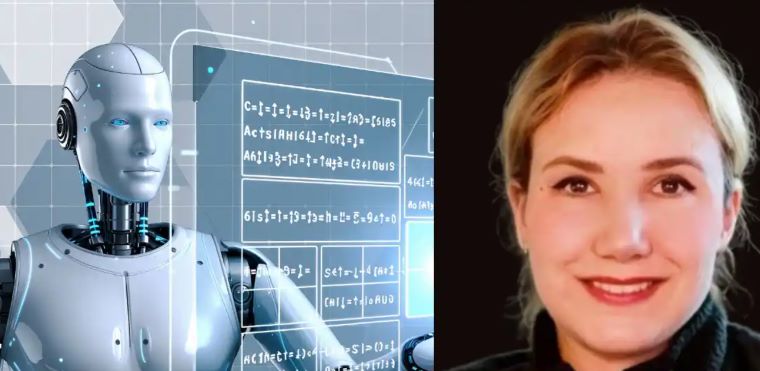
A senior engineer at Google has sparked widespread discussion in the artificial intelligence community after claiming that a competitor’s AI tool — Claude — was able to recreate in about one hour what her own team spent a year coding manually. The remark highlights the growing capabilities of large AI models to accelerate complex programming and raises questions about how AI is reshaping software development workflows.
What Was Said and Who Said It
The comments came from Jaana Dogan, a technical leader involved with Google’s Gemini AI project. In public remarks, Dogan described being “stunned” when an AI model built by a rival company — referred to as Claude — produced functional code that effectively replicated or matched outputs from her team’s lengthy manual effort.
According to her account, while her team had spent close to a year building, testing and refining the codebase, Claude was able to generate highly similar code in roughly one hour. Dogan emphasised that the result was not a trivial snippet but a substantial chunk of work that previously required extensive human input.
What This Illustrates About AI Progress
Experts say the anecdote points to several broader trends in artificial intelligence:
1. Rapid AI-Assisted Development
AI tools are increasingly capable of generating large amounts of reliable code, significantly reducing development time for certain tasks. This can help organisations accelerate prototyping, automate repetitive coding work and free human engineers to focus on higher-level design and strategy.
2. Narrow vs. General Expertise
AI systems excel at replicating patterns from existing codebases, documentation and examples. In this case, a model like Claude — trained on a vast corpus of programming information — may quickly synthesise working solutions. Human developers, by contrast, bring domain context, debugging insight and nuanced judgement that AI may not fully replicate yet.
3. Competition Between AI Platforms
Google’s Gemini and Claude (developed by a rival AI organisation) represent different approaches to large-language and coding models. Comments from industry insiders reflect both competitive dynamics and mutual benchmarking — where real-world comparisons drive innovation.
Context: What Claude and Gemini Are
Claude is an AI assistant developed by Anthropic, designed for natural language understanding and content generation — including code. It has been positioned as a competitor to several large-language models, capable of helping with software tasks, analysis and creative work.
Google’s Gemini is part of Google’s AI initiative, intended to combine multimodal understanding (text, vision, etc.) with coding and reasoning capabilities. Both tools are rapidly evolving, with frequent updates aimed at improving accuracy, safety and developer utility.
Reactions From Tech and AI Communities
The engineer’s comments sparked a mix of admiration, curiosity and debate among developers and AI observers:
- Some applauded the speed with which advanced AI systems can generate complex code, saying this is a real step toward integrating AI into mainstream software engineering.
- Others cautioned against over-reliance on AI for critical systems, noting that AI-generated code must still be reviewed carefully for correctness, security and maintainability.
- A portion of the programming community reflected on how AI tools may shift job roles — freeing developers from repetitive tasks, but also requiring them to adapt to new toolchains and oversight responsibilities.
Limitations and Practical Considerations
While the anecdote suggests remarkable speed, specialists point out that:
- Speed does not guarantee quality: AI-generated code may require extensive review, testing and context-specific adjustment before it can be used in production.
- Human oversight remains essential: Concepts such as architecture design, security implications and system reliability are not fully automated and still depend on human expertise.
- AI tools vary widely in capability, depending on training data, model architecture and prompt engineering.
What This Means for Developers
For software engineers and technology teams, the incident underscores a shift toward a collaborative human-AI workflow:
- AI can rapidly generate drafts, hypotheses and boilerplate code
- Humans provide validation, ethical judgement and domain insight
- The goal is a complementary partnership where innovation, not replacement, drives progress
Many organisations are already rethinking their development processes to incorporate AI-assisted tools as standard components of coding, testing and documentation workflows.
Conclusion
The claim that an AI tool like Claude could recreate in one hour what took a human team a year to code highlights the transformative potential of AI in software development. While such anecdotes should be interpreted with context and careful nuance, they reflect broader shifts in how code is produced, reviewed and deployed.
As tools such as Claude, Gemini and others continue to evolve, developers and organisations alike will need to balance efficiency gains with quality assurance, ethical use and domain expertise, ensuring that AI enhances human creativity without compromising reliability.