
Ancient Hominin Evidence Found in Sulawesi Suggests Multiple Human-like Populations 200,000 Years Ago
Archaeologists have uncovered evidence of an ancient human-like species in Indonesia’s Sulawesi island that lived alongside early humans around 200,000 years ago. The discovery adds a surprising new chapter to the story of human evolution in Southeast Asia, pointing to a more diverse mix of hominin populations than previously understood.
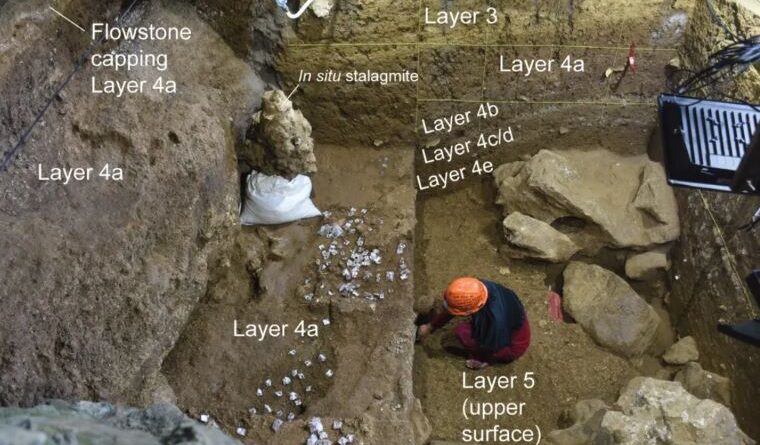
The findings, made at a cave site known as Leang Bulu Bettue, include stone tools and other signs of prehistoric activity that do not match the known technologies of modern Homo sapiens or other well-documented hominin species. This suggests the presence of at least one additional hominin group that occupied the region during the Middle Pleistocene — a time when several human relatives were emerging and spreading across Asia.
What Was Discovered
Researchers working at the Leang Bulu Bettue site unearthed:
- Stone tools of a kind not easily attributed to early modern humans
- Cultural artefacts that hint at complex behaviour
- Geological dating that places these remains at about 200,000 years old
The tools are simple but purposeful and show distinct characteristics that do not align neatly with the lithic assemblages typically associated with early Homo sapiens. This implies the makers belonged to a separate hominin lineage with their own technological signature.
Why Sulawesi Matters
Sulawesi — part of the Indonesian archipelago — sits in a region of immense biological and evolutionary interest. It was a key zone between Africa and Australia where many species, including ancient humans, are believed to have dispersed. But until now, evidence for early human occupation in this area was limited and confusing.
The new finds suggest that:
- Ancient hominins were present in Sulawesi much earlier than previously confirmed
- These groups may have developed unique tool technologies independent of other Eurasian populations
- Multiple human-like populations may have coexisted in Asia before Homo sapiens became dominant
This challenges older models of human migration that pictured a simple “Out of Africa” replacement by modern humans. Instead, Southeast Asia now looks more like a mosaic of overlapping hominin communities.
Different Hominins Living at the Same Time?
The evidence supports a growing view in paleoanthropology: human evolution was not a straight line. Multiple hominin groups — some now extinct — coexisted, migrated and adapted to various environments.
In other parts of Asia, fossils and artefacts have already hinted at:
- Denisovans, known from DNA and fragmentary bones
- Hominins like Homo erectus present in Asia hundreds of thousands of years earlier
- Other isolated populations whose identities are still being pieced together
The Sulawesi discoveries add to this picture by suggesting yet another human-like lineage that left behind stone tools and possibly cultural traces.
What This Means for Human Evolution Studies
Anthropologists and archaeologists say these findings:
- Expand the known geographic range of ancient hominins in Asia
- Show that human evolution involved diverse, regionally distinct populations
- Support the idea that early humans and human-like species were interacting — directly or indirectly — over long periods
Researchers hope that further excavations will yield fossil evidence — such as teeth or bone fragments — that could help clarify exactly which hominin species made these tools.
The Next Steps in Research
The current evidence is archaeological (tools and context), not yet skeletal. That means scientists are still working toward:
- Finding fossil remains associated with the tools
- Using advanced dating techniques to refine the timeline
- Conducting comparative studies with other hominin sites in Asia and Africa
- Integrating genetic data if any ancient DNA can someday be recovered
These steps could eventually answer big questions: Were these ancient toolmakers close relatives of modern humans? Or do they represent a completely unique branch of the human family tree?
Conclusion
The discovery of around 200,000-year-old hominin activity in Sulawesi is a major development in our understanding of ancient human history. It underscores that Southeast Asia was not a backwater of human evolution but a dynamic crossroads where multiple human-like populations once lived, adapted and left traces of their existence.
As new research unfolds, this region may continue to reshape our understanding of how humans — and human-like species — evolved, migrated and interacted across the ancient world.