
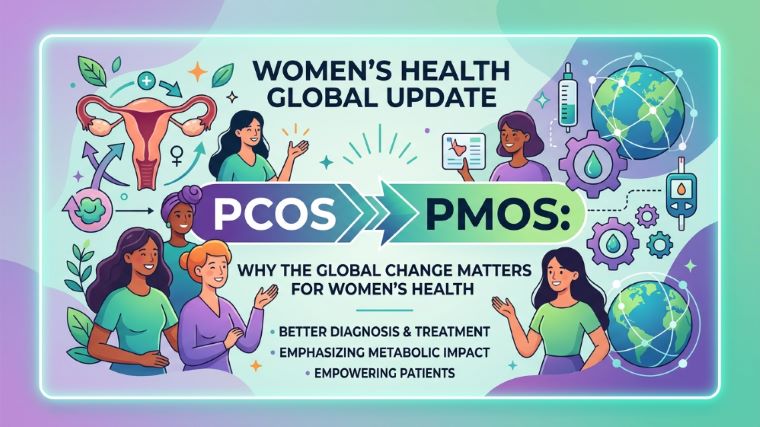
PCOS Officially Renamed To PMOS: Why The Global Change Matters For Women’s Health
In a major development for women’s healthcare, the condition widely known as PCOS (Polycystic Ovary Syndrome) has officially been renamed PMOS — short for “Polyfollicular Metabolic Ovarian Syndrome” — following an international medical consensus.
Health experts say the name change aims to correct decades of misunderstanding surrounding the condition and improve diagnosis, treatment, and awareness worldwide.
Why Was PCOS Renamed?
For years, doctors and researchers argued that the term “Polycystic Ovary Syndrome” was medically misleading.
Experts explained that:
- Many women with PCOS do not actually have ovarian cysts
- The condition affects much more than the ovaries
- Metabolic and hormonal issues are central to the disorder
The new name — PMOS (Polyfollicular Metabolic Ovarian Syndrome) — is intended to better reflect the condition’s true nature.
What Does PMOS Mean?
The updated name highlights two important aspects of the condition:
1. Polyfollicular
This refers to the presence of multiple immature follicles in the ovaries rather than true cysts.
2. Metabolic
This emphasizes the strong connection between the condition and:
- Insulin resistance
- Weight gain
- Diabetes risk
- Heart health issues
- Hormonal imbalance.
Experts say the previous term caused confusion because many patients believed ovarian cysts were the main problem, when the condition is actually much broader.
What Is PMOS/PCOS?
PMOS, formerly known as PCOS, is one of the most common hormonal disorders affecting women of reproductive age.
The condition can cause:
- Irregular periods
- Excess facial or body hair
- Acne
- Weight gain
- Fertility problems
- Hair thinning
- Insulin resistance
Symptoms and severity vary greatly from person to person.
Why The Old Name Was Considered Problematic
Researchers say the old terminology created several issues:
- Delayed diagnosis
- Misunderstanding among patients
- Incomplete treatment approaches
- Focus only on fertility problems
Some women without ovarian cysts were told they could not have PCOS, even when they showed clear hormonal and metabolic symptoms.
Medical experts believe the new name may help healthcare providers take a more comprehensive treatment approach.
Global Experts Reached A Consensus
The renaming followed years of international discussion among:
- Endocrinologists
- Gynecologists
- Reproductive health experts
- Researchers
Medical organizations said the updated terminology better reflects modern scientific understanding of the disorder.
How Common Is PMOS?
According to health studies, millions of women globally are affected by the condition.
However, experts warn that many cases remain undiagnosed because symptoms are often ignored or misunderstood.
Risk factors may include:
- Family history
- Obesity
- Insulin resistance
- Hormonal imbalance
Early diagnosis is considered important for managing long-term health risks.
Health Risks Linked To PMOS
Doctors say untreated PMOS can increase the risk of:
- Type 2 diabetes
- Heart disease
- Infertility
- Sleep disorders
- Anxiety and depression
- High cholesterol
- Endometrial problems
This is one reason why experts wanted the new name to emphasize metabolic health, not just ovarian symptoms.
Will Treatment Change?
The renaming itself does not change current treatments immediately, but experts believe it may influence:
- Future medical guidelines
- Awareness campaigns
- Diagnostic criteria
- Patient education
Treatment for PMOS may still include:
- Lifestyle changes
- Exercise and diet management
- Hormonal therapy
- Fertility support
- Insulin management medications
depending on symptoms and individual needs.
Social Media And Public Reaction
The announcement sparked widespread discussion online.
Many women welcomed the change, saying:
- The old name caused confusion
- Doctors often misunderstood symptoms
- The new term feels more medically accurate
Others expressed concern about:
- Adapting to the new terminology
- Public awareness during the transition period
Healthcare experts say education campaigns will likely play a major role in helping people understand the updated term.
Why This Change Is Significant
Medical experts describe the renaming as more than just a terminology update.
They believe it reflects:
- Better scientific understanding
- Greater focus on women’s health
- Improved patient-centered care
- Recognition of metabolic health risks
The move is also seen as part of a broader effort to modernize medical language based on updated research.
Conclusion
The official renaming of PCOS to PMOS marks a major shift in women’s healthcare and medical understanding of the condition.
Experts hope the new term will:
- Reduce confusion
- Improve diagnosis
- Encourage better treatment
- Increase awareness about metabolic health risks linked to the disorder
While the transition may take time globally, doctors believe the change could ultimately help millions of women receive more accurate care and support.