
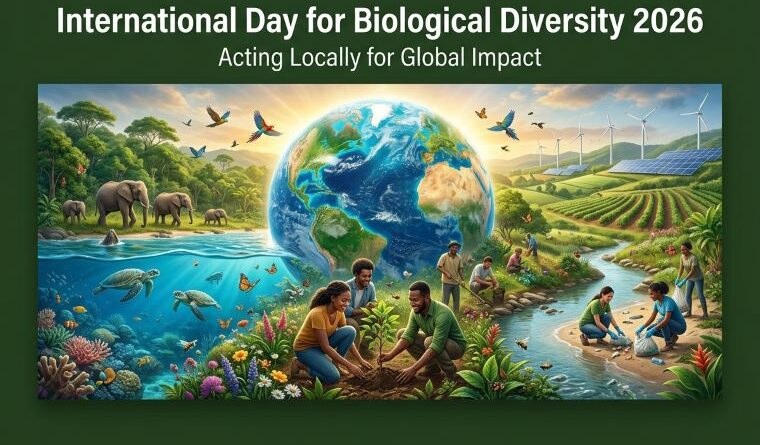
International Day for Biological Diversity 2026: Acting Locally for Global Impact
The International Day for Biological Diversity 2026 is being observed globally on May 22 with the official theme, “Acting locally for global impact.” Declared by the United Nations, this annual observance highlights the urgent need to protect biodiversity and encourage sustainable actions that preserve ecosystems for future generations.
As biodiversity loss accelerates due to climate change, deforestation, pollution, and habitat destruction, the 2026 campaign focuses on empowering local communities, governments, organizations, and individuals to take meaningful action that contributes to global conservation goals.
What Is International Day for Biological Diversity?
The International Day for Biological Diversity (IDB) is celebrated every year on May 22 to commemorate the adoption of the Convention on Biological Diversity (CBD) in 1992 during the Earth Summit in Rio de Janeiro, Brazil. The observance was established by the United Nations to raise awareness about biodiversity conservation and sustainable development.
Biodiversity refers to the variety of life on Earth, including plants, animals, microorganisms, ecosystems, and genetic diversity. Healthy biodiversity is essential for food security, clean air, water purification, medicine, climate stability, and economic growth.
Theme of Biodiversity Day 2026
The official theme for International Day for Biological Diversity 2026 is:
“Acting locally for global impact”
The theme emphasizes that global biodiversity conservation starts with local action. Whether it is protecting forests, reducing waste, planting native species, conserving wetlands, or promoting sustainable agriculture, small efforts at the community level can create worldwide environmental benefits.
The campaign also aligns with the Kunming-Montreal Global Biodiversity Framework (KMGBF), which includes 23 global targets aimed at halting and reversing biodiversity loss by 2030.
Why Biodiversity Matters
Biodiversity forms the foundation of human survival and ecological balance. However, the world is currently facing an alarming biodiversity crisis.
According to the United Nations:
- Around 1 million plant and animal species are threatened with extinction.
- Nearly 75% of land environments and 66% of marine ecosystems have been significantly altered by human activities.
- Ecosystem degradation directly affects food production, climate regulation, and public health.
Protecting biodiversity helps:
- Maintain ecological balance
- Support agriculture and food systems
- Combat climate change
- Preserve natural resources
- Sustain livelihoods and indigenous communities
- Promote long-term economic stability
Key Focus Areas of Biodiversity Day 2026
The 2026 campaign is built around three major pillars:
1. Look and Learn
People are encouraged to explore biodiversity within their local communities and understand the importance of conservation efforts. Educational programs, awareness campaigns, and citizen science initiatives play a major role.
2. Connect and Act
Communities, schools, environmental groups, businesses, and local governments are encouraged to collaborate on biodiversity protection projects such as tree plantation drives, habitat restoration, and sustainable farming initiatives.
3. Share
Individuals and organizations are invited to share their biodiversity actions and success stories through social media campaigns, workshops, and environmental events using hashtags like #BiodiversityDay.
How Countries and Communities Are Participating
Around the world, governments and environmental organizations are organizing awareness programs, workshops, eco-tourism activities, photography competitions, school campaigns, and conservation projects to mark the occasion.
In India, several state biodiversity boards and environmental agencies are promoting sustainable development and ecological conservation through local initiatives and public engagement activities.
Role of Local Communities in Biodiversity Conservation
The 2026 campaign strongly highlights the importance of local communities and indigenous populations in preserving biodiversity. Traditional ecological knowledge, sustainable resource management, and community-led conservation projects are increasingly recognized as essential for achieving global biodiversity targets.
Local governments and citizens are encouraged to:
- Protect local ecosystems
- Reduce plastic and chemical pollution
- Promote sustainable agriculture
- Support wildlife conservation
- Restore degraded habitats
- Participate in biodiversity planning
Biodiversity and Sustainable Development Goals (SDGs)
Biodiversity conservation is closely linked to the United Nations Sustainable Development Goals (SDGs), especially goals related to climate action, clean water, life below water, life on land, and sustainable cities.
Environmental experts believe that protecting biodiversity is critical for achieving sustainable development and ensuring a healthy future for humanity.
Final Thoughts
The International Day for Biological Diversity 2026 serves as a reminder that every local action matters in the global fight against biodiversity loss. From communities protecting forests to individuals reducing waste and supporting sustainable lifestyles, collective efforts can create a lasting environmental impact.
With the theme “Acting locally for global impact,” Biodiversity Day 2026 encourages people worldwide to recognize their role in preserving nature and building a more sustainable future for generations to come.