
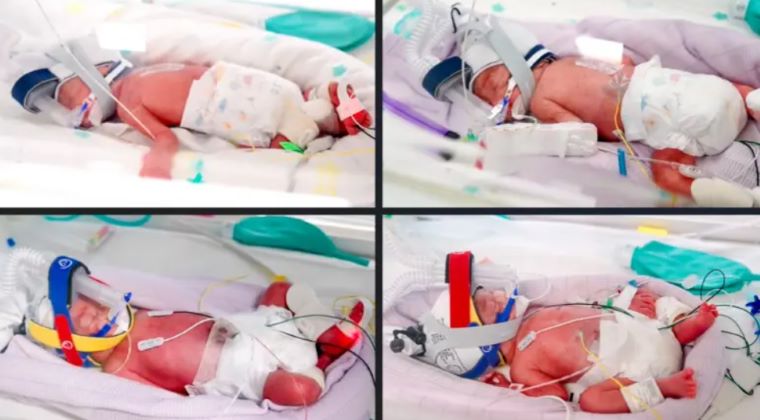
Australian Woman Welcomes Rare Identical Quadruplet Girls, Doctors Call It a One-in-15-Million Pregnancy
In an extraordinary medical event, a 34-year-old Australian woman has given birth to identical quadruplet girls after a naturally conceived pregnancy—a phenomenon doctors estimate occurs in only one in 15 million pregnancies. Medical experts have described the birth as one of the rarest ever recorded in Australia and an exceptional achievement in maternal and neonatal care.
The mother, Jenitar Sau Na’amoana, delivered the four girls at the Royal Brisbane and Women’s Hospital in Queensland after months of intensive monitoring due to the high-risk nature of the pregnancy.
A Naturally Conceived Pregnancy That Amazed Doctors
Unlike many higher-order multiple pregnancies that result from fertility treatments, this pregnancy occurred without IVF or fertility medication.
Doctors explained that the babies developed from a single fertilized egg that split into four embryos, making them identical quadruplets. Even more remarkably, all four babies shared one placenta, making the pregnancy exceptionally rare. Experts said they are unaware of another documented case like this in Australia.
Delivery at 28 Weeks
Because the pregnancy carried significant risks, the expectant mother was closely monitored by a multidisciplinary medical team from around 10 weeks of pregnancy and was admitted to the hospital at around 25 weeks.
The babies were delivered by Caesarean section on July 14 at 28 weeks and four days of pregnancy.
The four girls have been named:
- Emily
- Harriet
- Catherine
- Alexa
Baby Alexa was named after Dr. Alexa Bendall, the maternal-fetal medicine specialist who led the mother’s care throughout the pregnancy.
Mother and Babies Are Doing Well
Although the babies were born prematurely, doctors reported that all four infants are healthy and receiving specialized care in the Neonatal Intensive Care Unit (NICU).
The mother also recovered well following the delivery despite the challenges associated with such a high-risk pregnancy. Doctors described the successful outcome as a remarkable achievement made possible through continuous monitoring and coordinated medical care.
Why Is This Birth So Rare?
Medical experts say the pregnancy is extraordinary for several reasons:
- It occurred naturally without fertility treatment.
- The babies are identical quadruplets.
- All four developed from a single fertilized egg.
- They shared one placenta throughout pregnancy.
- The estimated chance is around one in 15 million pregnancies.
Doctors noted that while naturally conceived quadruplets are already extremely uncommon, naturally conceived identical quadruplets are even rarer.
Family Grows to Ten Members
Before welcoming the quadruplets, the couple were already parents to four children. The arrival of the four baby girls has expanded their household to ten family members.
The unexpected addition has attracted widespread public attention, and the family has received significant community support as they prepare for life with eight children.
What Doctors Said
Doctors involved in the case described the pregnancy as one of the rarest they have ever encountered.
According to the medical team, the successful outcome required:
- Frequent ultrasound monitoring.
- Continuous fetal assessment.
- Careful management of shared placental circulation.
- Early hospitalization.
- A planned premature Caesarean delivery.
The specialists praised the mother’s resilience and highlighted the collaborative effort that helped ensure a safe outcome for both mother and babies.
Why Multiple Pregnancies Are High Risk
Pregnancies involving three or more babies are generally considered high risk because they increase the likelihood of:
- Premature birth
- Low birth weight
- Placental complications
- Maternal health risks
- Need for neonatal intensive care
Early diagnosis and specialized obstetric care play a crucial role in improving outcomes for both the mother and babies.
Conclusion
The birth of naturally conceived identical quadruplet girls in Australia is being celebrated as a remarkable medical milestone. With odds estimated at one in 15 million, the pregnancy has amazed doctors and drawn international attention. Thanks to specialized medical care and close monitoring, both the mother and her four daughters are doing well, offering an inspiring example of modern maternal and neonatal medicine.
Frequently Asked Questions (FAQs)
1. Why is this quadruplet birth considered so rare?
Doctors estimate that naturally conceived identical quadruplets occur in only about one in 15 million pregnancies, making this one of the rarest documented cases.
2. Were fertility treatments used?
No. The pregnancy occurred naturally, without IVF or fertility medication.
3. How many weeks pregnant was the mother at delivery?
The babies were delivered by Caesarean section at 28 weeks and four days of pregnancy.
4. What are the babies’ names?
The four girls are named Emily, Harriet, Catherine, and Alexa. One baby was named after the treating specialist, Dr. Alexa Bendall.
5. Are the mother and babies healthy?
Yes. Doctors reported that the mother is recovering well, and all four babies are stable while receiving care in the NICU.
6. What makes identical quadruplets different from regular quadruplets?
Identical quadruplets develop from one fertilized egg that splits into four embryos, whereas non-identical quadruplets result from multiple separate eggs being fertilized.
Top of Form
Bottom of Form