
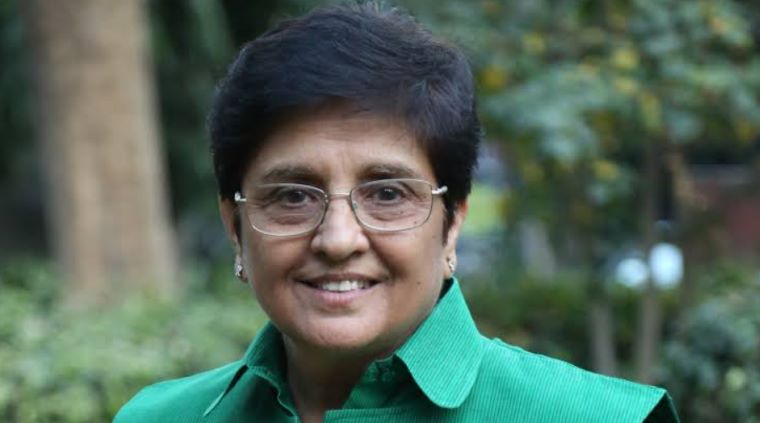
Kiran Bedi Proposes Civil Defence Deployment for Student Protests, Urges Humane Crowd Management
Former IPS officer and ex-Lieutenant Governor of Puducherry Kiran Bedi has proposed an alternative approach to handling student protests in India. Commenting on the recent Citizens’ Justice Platform (CJP) demonstrations in Delhi, Bedi suggested that trained Civil Defence volunteers should be deployed instead of riot police during peaceful student agitations.
Her remarks come amid ongoing political debate following protests over examination irregularities, during which several Opposition leaders, including Rahul Gandhi and Priyanka Gandhi Vadra, were detained by Delhi Police near the Prime Minister’s residence. According to Bedi, a less confrontational approach could help maintain law and order while protecting the democratic right to peaceful protest.
What Did Kiran Bedi Suggest?
Sharing her views on social media, Kiran Bedi recommended that the Central Government, Prime Minister Narendra Modi, and Union Home Minister Amit Shah consider involving Civil Defence volunteers in managing student demonstrations.
According to her proposal:
- Peaceful student gatherings should not immediately be handled by riot-control police.
- Trained Civil Defence personnel can act as a bridge between authorities and protesters.
- Their presence may reduce tension and improve communication.
- Police intervention should be reserved for situations where violence or serious law-and-order issues arise.
Bedi emphasized that student protests require sensitivity and dialogue rather than an aggressive policing approach.
Why Did She Make This Suggestion?
The recommendation followed criticism over the police response during the recent CJP protest in Delhi.
Videos and images from the demonstration sparked widespread discussion on social media regarding the handling of students and political workers during the march toward the Prime Minister’s residence.
Bedi argued that a community-oriented response could help avoid unnecessary confrontation while ensuring public safety and protecting constitutional rights.
What Is Civil Defence?
Civil Defence is a volunteer-based organization that supports authorities during emergencies and public events.
Civil Defence volunteers are generally trained in:
- Crowd management
- Emergency response
- Disaster relief
- Public communication
- First aid
- Assisting law enforcement during non-violent situations
Bedi believes these trained volunteers could effectively engage with student groups before situations escalate.
Benefits Highlighted by Kiran Bedi
According to Bedi, deploying Civil Defence personnel could offer several advantages:
1. Reduce Tension
A non-militarized presence may help lower anxiety among students and protesters.
2. Improve Communication
Volunteers can facilitate dialogue between protesters and authorities, helping resolve misunderstandings peacefully.
3. Minimize Confrontation
Using volunteers instead of riot-control units could reduce the chances of clashes during peaceful demonstrations.
4. Better Public Trust
A community-based approach may strengthen confidence in public institutions while maintaining law and order.
5. Preserve Democratic Rights
Peaceful protests can continue under supervision without creating an atmosphere of intimidation.
Context Behind the CJP Protest
The recent demonstrations were organized by students and Opposition leaders demanding greater accountability over alleged examination irregularities and paper leaks.
As protesters marched toward the Prime Minister’s residence, Delhi Police stopped the procession citing security restrictions around the high-security zone.
Several Congress leaders, including Rahul Gandhi and Priyanka Gandhi Vadra, were taken into preventive detention before being released later.
The incident triggered a nationwide debate over the balance between maintaining public order and protecting the right to peaceful protest.
Mixed Reactions
Kiran Bedi’s proposal has generated mixed reactions.
Supporters argue that:
- Student protests should be handled differently from violent demonstrations.
- Dialogue-based policing is more effective.
- Civil Defence volunteers could help de-escalate tensions.
Others believe that:
- Security decisions depend on the specific threat assessment.
- Police deployment near high-security locations cannot always be replaced by volunteers.
- Law enforcement agencies must retain operational flexibility during sensitive events.
Crowd Management in Democratic Societies
Experts often emphasize that successful crowd management combines:
- Open communication
- Negotiation
- Minimal use of force
- Proportionate policing
- Respect for constitutional rights
Many countries increasingly train police in de-escalation techniques, especially when dealing with peaceful public demonstrations.
Conclusion
Kiran Bedi’s suggestion to deploy Civil Defence volunteers instead of riot police during peaceful student protests has added a new perspective to the ongoing debate on crowd management in India. While authorities continue to prioritize security around sensitive government locations, her proposal highlights the importance of dialogue, community participation, and humane policing in managing democratic protests. Whether such an approach will be considered in future demonstrations remains to be seen.
Frequently Asked Questions (FAQs)
1. What did Kiran Bedi suggest regarding student protests?
She proposed deploying trained Civil Defence volunteers instead of riot police during peaceful student demonstrations to reduce confrontation.
2. Why did Kiran Bedi make this proposal?
Her suggestion came after the recent CJP protest in Delhi, where police detained several protesters, leading to discussions about how student demonstrations should be managed.
3. What is Civil Defence?
Civil Defence is a volunteer organization trained to assist authorities in emergency response, crowd management, disaster relief, and public safety activities.
4. Did Kiran Bedi suggest replacing the police completely?
No. She suggested using Civil Defence personnel during peaceful protests while reserving police intervention for situations involving violence or serious law-and-order concerns.
5. What was the CJP protest about?
The protest focused on alleged examination irregularities, paper leak concerns, and demands for greater accountability in the education system.
6. Has the government accepted Kiran Bedi’s proposal?
As of now, there has been no official announcement indicating that the government has adopted or implemented her recommendation.
Top of Form
Bottom of Form