
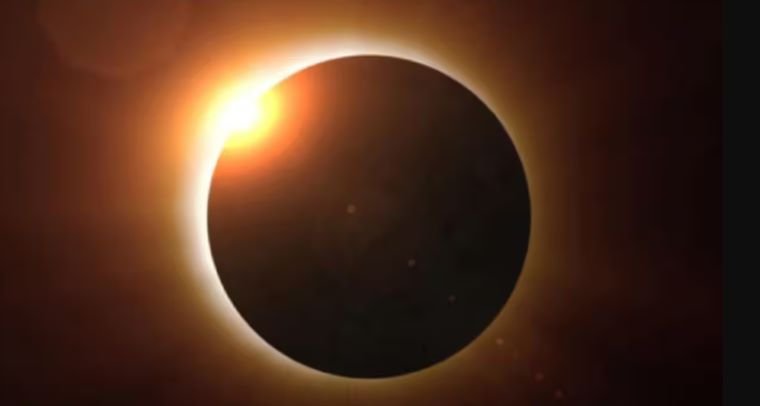
August 12, 2026 Total Solar Eclipse: Everything You Need to Know
Skywatchers across parts of the world are eagerly awaiting the Total Solar Eclipse on August 12, 2026, one of the most anticipated astronomical events of the decade. During a total solar eclipse, the Moon passes directly between the Earth and the Sun, temporarily blocking the Sun’s light and turning day into twilight along the path of totality.
The event has also attracted attention in India, with many people wondering whether it will be visible in the country and whether traditional Sutak rules will apply.
What Is a Total Solar Eclipse?
A total solar eclipse occurs when:
- The Moon moves directly between the Earth and the Sun.
- The Moon completely covers the Sun for observers located along the path of totality.
- The Sun’s outer atmosphere (corona) becomes visible.
- Daylight briefly turns into darkness in affected regions.
Total solar eclipses are rare because they can only be seen from a narrow path on Earth’s surface.
When Is the Solar Eclipse?
The Total Solar Eclipse will occur on:
- Date: Wednesday, August 12, 2026
The eclipse will be visible in different regions at different local times depending on geographical location.
Will the Eclipse Be Visible in India?
No.
According to astronomical reports, the August 12, 2026 Total Solar Eclipse will not be visible from India.
The eclipse’s path of totality will pass through parts of:
- Greenland
- Iceland
- Spain
- Portugal
- Russia
- Portions of the Arctic
Since the eclipse will not be observable from India, Indian residents will not experience the event directly.
Will Sutak Kaal Be Applicable in India?
According to many Hindu religious traditions:
- Sutak Kaal is generally observed only if a solar eclipse is visible from a particular location.
- Since the August 12, 2026 eclipse will not be visible in India, many religious scholars state that Sutak Kaal will not be applicable for most parts of the country.
However, customs may vary among different temples, communities, and families. Those following specific traditions may consult their local religious authorities for guidance.
Safety Tips for Watching a Solar Eclipse
If you are in a region where the eclipse is visible, never look directly at the Sun without proper eye protection.
Follow these safety guidelines:
- Use ISO 12312-2 certified eclipse glasses.
- Never use ordinary sunglasses.
- Avoid looking through cameras, telescopes, or binoculars without certified solar filters.
- Supervise children during eclipse viewing.
- Use indirect viewing methods, such as a pinhole projector, if certified eclipse glasses are unavailable.
Looking directly at the Sun without protection can cause permanent eye damage.
Astrological Beliefs About the Eclipse
In Vedic astrology, solar eclipses are traditionally associated with spiritual reflection and are believed by some practitioners to influence different zodiac signs. Various astrologers have suggested that signs such as Taurus (Vrishabh) and others may experience symbolic or personal effects during this period.
It is important to note that these are matters of religious or astrological belief and are not supported by scientific evidence.
Precautions Often Suggested for Pregnant Women
Many traditional beliefs recommend that pregnant women:
- Stay indoors during the eclipse.
- Avoid directly viewing the eclipse.
- Engage in prayer or meditation.
However, medical experts state that there is no scientific evidence that a solar eclipse harms pregnancy. The only scientifically established risk is eye damage from looking directly at the Sun without proper protection.
Pregnant women can follow cultural traditions if they choose, while also relying on evidence-based medical advice.
Why This Eclipse Is Special
The August 12, 2026 eclipse is significant because:
- It is one of the longest total solar eclipses visible over Europe in recent decades.
- Millions of people are expected to witness it.
- Scientists will study the Sun’s corona and atmospheric conditions during totality.
- It offers a rare opportunity for astronomical research and public observation.
Scientific Importance of Solar Eclipses
Solar eclipses allow scientists to:
- Study the Sun’s corona.
- Observe solar magnetic activity.
- Improve understanding of space weather.
- Test scientific instruments under unique conditions.
Such observations contribute to ongoing research into solar physics and its effects on Earth.
Conclusion
The Total Solar Eclipse of August 12, 2026 promises to be a remarkable astronomical event for observers along its path across parts of Europe and the Arctic. Although it will not be visible in India, interest remains high because of its rarity and scientific significance. For those able to witness the eclipse, proper eye protection is essential. In India, since the eclipse is not expected to be visible, Sutak observances are generally not considered applicable according to many traditional interpretations, though individual practices may differ.
Frequently Asked Questions (FAQs)
1. When is the Total Solar Eclipse in 2026?
The Total Solar Eclipse will occur on Wednesday, August 12, 2026.
2. Will the August 12, 2026 solar eclipse be visible in India?
No. According to available astronomical information, the eclipse will not be visible from India.
3. Will Sutak Kaal apply in India?
Generally, Sutak is observed only where a solar eclipse is visible. Since this eclipse is not expected to be visible in India, many traditions do not observe Sutak, although customs can vary.
4. Is it safe to look directly at a solar eclipse?
No. You should never look directly at the Sun during a solar eclipse without certified solar eclipse glasses or approved solar filters, as it can cause permanent eye damage.
5. Does science support claims that solar eclipses affect pregnancy?
No. There is no scientific evidence that a solar eclipse harms pregnant women or unborn babies. The proven health risk is eye injury from viewing the Sun without proper protection.
6. Why are total solar eclipses important?
They provide scientists with a rare opportunity to study the Sun’s corona, solar activity, and space weather, while also offering a spectacular natural phenomenon for observers.