
Bajaj Pulsar 125 and Pulsar 150 Launched in India: Prices, Features and Big Tech Upgrades
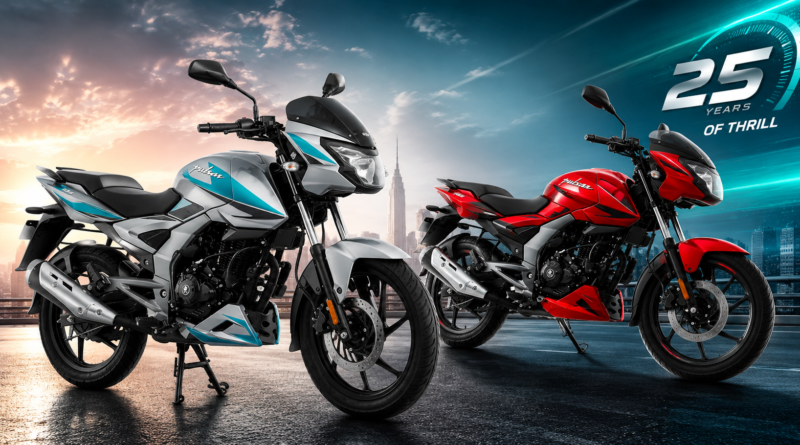
Bajaj Auto has launched the all-new Pulsar 125 and Pulsar 150 in India, marking a major update for two of the most familiar names in the Pulsar lineup. The launch also comes as the iconic Pulsar brand completes 25 years in India. Both motorcycles receive new engines, updated chassis hardware, monoshock suspension and a significant jump in technology.
The new Pulsar 125 starts at ₹92,990, while the Pulsar 150 starts at ₹1,15,233, with all prices being ex-showroom.
Bajaj Pulsar 125 and Pulsar 150 Price in India
The new Pulsar 125 is available in four variants:
- Pulsar 125 Base – ₹92,990
- Pulsar 125 STD Single Seat – ₹99,291
- Pulsar 125 STD Split Seat – ₹1,00,288
- Pulsar 125 Premium Split Seat – ₹1,04,318
The Pulsar 150 is offered in three configurations:
- Pulsar 150 Single Disc – ₹1,15,233
- Pulsar 150 Twin Disc Single Seat – ₹1,22,184
- Pulsar 150 Twin Disc Split Seat – ₹1,23,187
All prices are ex-showroom.
New Engines With Stronger Low-End Performance
Bajaj has given both motorcycles new-generation engines and updated gearboxes.
The Pulsar 125 produces 11.7bhp, while the Pulsar 150 makes 13.6bhp. Bajaj says both motorcycles have been tuned to provide stronger low-rpm torque, with around 85% of available torque accessible from 3,000rpm onwards.
The gearbox has also been revised with deeper gear bevels. The aim is to improve tractability at lower speeds and reduce the need for frequent clutch operation in city traffic.
The Pulsar 150 additionally gets an oil-cooled engine, adding another layer of thermal management to the larger motorcycle.
Crawl Tech Makes City Riding Easier
One of the more unusual additions to the new Pulsar range is Crawl Tech.
The feature allows the motorcycle to maintain slow forward movement without the rider constantly needing to apply throttle. It is particularly designed for stop-and-go traffic, where frequent clutch and throttle inputs can become tiring.
According to Bajaj, Crawl Tech is available across the Pulsar 125 and Pulsar 150 range.
Ride Modes Come to the Pulsar 125 and 150
The new motorcycles also introduce three riding modes — Road, Rain and Sport.
On the Pulsar 125, the modes are available from the mid-level variants onwards, while the base model misses this feature. On the Pulsar 150, all variants get the three riding modes.
Selectable ride modes are still relatively uncommon on motorcycles in this displacement and price range, making the feature one of the most notable technology upgrades in the new Pulsar lineup.
5-Inch TFT Display With Navigation
Bajaj has also brought a 5-inch colour TFT display to higher-spec versions of the motorcycles.
The upgraded display supports features including Bluetooth connectivity and Google Maps navigation. The Pulsar 125’s mid and top variants get the TFT display, while the Pulsar 150 Twin Disc variants receive it as part of their higher equipment package.
Lower variants continue with a coloured LCD display, helping Bajaj keep the entry price below ₹1 lakh for the Pulsar 125.
New Chassis and Monoshock Suspension
The latest Pulsar 125 and Pulsar 150 are based on a new platform and frame. One of the biggest mechanical changes is the move to monoshock rear suspension, replacing the twin-shock setup used previously.
Both motorcycles continue to use telescopic front suspension, while the braking setup varies according to the variant.
The new chassis is intended to improve the motorcycles’ overall handling and ride characteristics while giving the Pulsar range a more contemporary foundation.
More Features on Higher Variants
Bajaj has packed several additional features into the higher variants, including:
- LED indicators
- Hazard lights
- USB Type-C charging
- Integrated Starter Generator (ISG)
- Bluetooth connectivity
- Google Maps navigation
- 5-inch TFT display
- Three riding modes
- Monoshock rear suspension
- Crawl Tech
The entry-level Pulsar 125 focuses on the essentials, with features such as an LED headlamp, coloured LCD, monoshock and Crawl Tech, while premium variants receive the more advanced technology package.
Pulsar 125 vs Pulsar 150: What’s Different?
The Pulsar 125 is aimed more directly at buyers looking for an affordable everyday motorcycle, while the Pulsar 150 offers additional performance and hardware.
The 150 gets the larger engine, oil cooling and higher output, while its Twin Disc variants add a rear disc brake and the larger TFT-based technology package.
Interestingly, the pricing gap between variants is relatively controlled. Moving from the Pulsar 150 Single Disc at ₹1,15,233 to the Twin Disc Single Seat at ₹1,22,184 costs ₹6,951 but adds several features, including the TFT display, rear disc brake, LED indicators, hazard lights and ISG.
Bajaj Pulsar Turns 25
The launch has additional significance for Bajaj as the Pulsar brand completes 25 years.
Since its introduction, the Pulsar name has become one of Bajaj Auto’s most recognisable motorcycle brands in India. The latest generation attempts to preserve the familiar Pulsar identity while bringing the motorcycles closer to today’s expectations around technology, connectivity and convenience.
New Bajaj Pulsar 125 and 150: Key Highlights
| Feature | Pulsar 125 | Pulsar 150 |
| Starting price | ₹92,990 | ₹1,15,233 |
| Power | 11.7bhp | 13.6bhp |
| Riding modes | Road, Rain, Sport on selected variants | Road, Rain, Sport |
| Rear suspension | Monoshock | Monoshock |
| TFT display | Selected variants | Twin Disc variants |
| Navigation | Yes, higher variants | Yes, higher variants |
| Crawl Tech | Yes | Yes |
| USB Type-C | Selected variants | Yes |
| Rear disc | Variant-dependent | Twin Disc variants |
Verdict
The new Bajaj Pulsar 125 and Pulsar 150 represent a much bigger update than a routine facelift. Bajaj has changed the engines, chassis and rear suspension while adding features such as ride modes, Crawl Tech, TFT displays and navigation.
The Pulsar 125’s ₹92,990 starting price makes it particularly interesting for buyers looking for a feature-rich commuter motorcycle, while the Pulsar 150 offers more performance and additional hardware from ₹1,15,233.
With these updates arriving as the Pulsar brand celebrates 25 years, Bajaj appears to be trying to keep one of India’s best-known motorcycle names relevant for the next generation of riders.