
Why Are Travellers Putting Tape Around Suitcase Wheels? The Viral Luggage Hack Explained
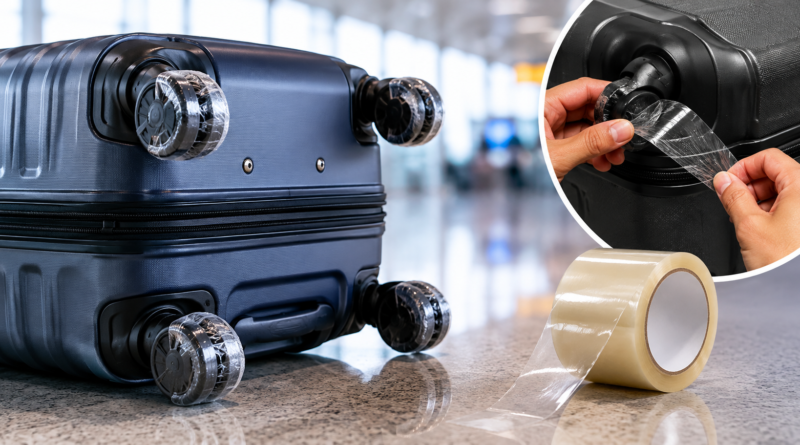
A surprisingly simple travel hack is gaining attention among frequent flyers: wrapping tape around suitcase wheels before travelling. At first glance, it may look unnecessary, but the trick is actually designed to protect one of the most exposed parts of your luggage.
Suitcase wheels go through a lot during a journey. They roll across airport floors, pavements, parking areas, hotel entrances and other rough surfaces. They can pick up dust, hair, mud and other debris, while the wheel mechanism itself can also suffer scratches or minor damage.
The idea behind the tape trick is to provide a temporary protective layer around the wheels while the suitcase is being transported.
Why Put Tape Around Suitcase Wheels?
The main reason travellers are trying this hack is protection.
Unlike the main body of a suitcase, the wheels are constantly exposed. When luggage is dragged, pushed or handled roughly, the wheels can come into contact with dirt, moisture and hard surfaces.
Wrapping tape around the wheels can help create a barrier against some of this debris. It can also protect the wheel surface from minor scratches during certain parts of a journey.
The trick has become particularly popular on social media, where travellers are sharing their experiences and recommending simple ways to keep luggage in better condition.
Suitcase Wheels Are More Vulnerable Than You Think
Modern suitcases are designed to make travelling easier, but their wheels remain one of their most vulnerable components.
Spinner luggage, in particular, usually has small wheels that extend beyond the suitcase body. This makes them convenient to manoeuvre but also leaves them exposed to impact.
During air travel, luggage may pass through baggage belts, trolleys, airport floors and loading areas before reaching its destination. While airport handling is generally designed to protect luggage, suitcases can still experience considerable movement and contact with different surfaces.
A damaged or jammed wheel can turn a simple airport transfer into a frustrating experience.
What Does the Tape Actually Do?
The tape is not meant to provide permanent protection or make a suitcase wheel indestructible. Instead, it works as a temporary covering.
Travellers typically wrap adhesive tape around the wheel or exposed section of the wheel before starting their journey. The covering can help prevent dust and small particles from directly collecting on the surface.
It may also provide some protection against superficial scratches and dirt.
However, the effectiveness depends on the type of tape used, how it is applied and the design of the suitcase wheels.
Which Tape Should You Use?
Travellers experimenting with this hack generally prefer a strong adhesive tape that can stay attached during movement.
The tape should be wrapped securely but should not interfere with the wheel’s ability to rotate.
It is important not to cover areas containing moving parts, bearings or gaps where the wheel needs to move freely. Poorly applied tape could actually make the wheel harder to operate.
A simple approach is to cover only the exposed surface rather than wrapping the entire wheel assembly.
Does It Really Protect Your Luggage?
The tape trick can offer some practical benefits, but it is not a replacement for proper luggage care.
It can help keep the wheel surface cleaner and may reduce exposure to dust and minor scratches. However, it cannot prevent serious damage caused by heavy impacts, rough handling or excessive weight.
In other words, think of it as a small protective measure rather than a guaranteed solution.
The biggest advantage may simply be keeping the wheels cleaner during certain parts of a trip.
There’s Another Benefit: Cleaner Wheels
One reason the hack has attracted attention is hygiene.
Suitcase wheels travel across surfaces that are not necessarily clean. Once travellers arrive at their hotel or home, those wheels can come into contact with floors and other indoor surfaces.
A protective covering can reduce the amount of dirt that directly reaches the wheel. After reaching your destination, the tape can simply be removed and discarded.
This makes the trick particularly appealing to travellers who are conscious about keeping their luggage clean.
When Should You Remove the Tape?
The tape should generally be removed once you have reached your destination, especially if it has become dirty or damaged.
Leaving adhesive tape on wheels for a long period could result in sticky residue collecting dust. It could also interfere with normal wheel movement if the adhesive begins to loosen.
After removing it, travellers can wipe the wheels with a suitable cloth and inspect them for cracks, loose parts or other damage.
Is This Travel Hack Worth Trying?
For frequent travellers, wrapping tape around suitcase wheels is an inexpensive and easy precaution.
It takes only a few minutes and may help protect exposed wheel surfaces from dirt and minor wear. There is little downside as long as the tape is applied correctly and does not restrict wheel movement.
However, travellers should not expect tape to prevent major damage. The quality of the suitcase, careful handling and avoiding excessive weight remain much more important for long-term durability.
The Simple Travel Trick Taking Over Social Media
The suitcase-wheel tape hack is a good example of how travellers are finding inexpensive ways to protect their belongings. Something as simple as a strip of tape can provide an extra layer of protection to a part of the suitcase that is often overlooked.
So, before your next trip, take a quick look at your suitcase wheels. If they are exposed and you want to keep them cleaner and better protected, a small amount of properly applied tape could be worth trying.
Just remember: the goal is to protect the wheel, not restrict it. Keep the tape away from moving mechanisms, remove it after the journey and check the wheels regularly for signs of damage.