
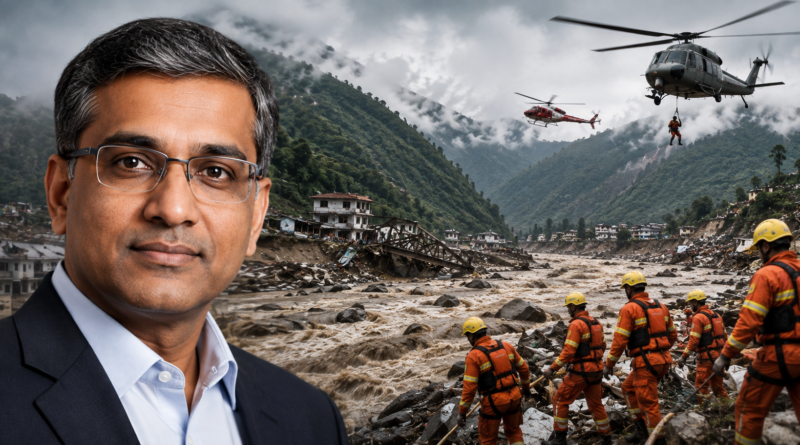
Infosys Public Services CEO Lax Gopisetty Unreachable After Nepal Floods
Lax Gopisetty, CEO of Infosys Public Services, remains unreachable after the devastating flash floods that struck Nepal on August 26, 2026. Infosys has confirmed that Gopisetty was visiting the region in a personal capacity when the disaster occurred and said it is working with relevant agencies to establish contact with him.
The development comes as Nepal continues to deal with a massive humanitarian crisis following the floods and landslides along the Nepal-Tibet border. Hundreds of people have died and thousands remain missing, making the search and rescue operation increasingly urgent.
Who Is Lax Gopisetty?
Lax Gopisetty is the chief executive of Infosys Public Services, a subsidiary of Infosys that focuses primarily on public-sector organisations in the United States and Canada.
According to his professional profile, Gopisetty has more than three decades of experience working across technology, business transformation and public-sector services.
Before becoming CEO of Infosys Public Services, he served as a Global Vice President at Infosys and led its Business Applications and Digital Workspace Service business. Before joining Infosys, he held senior positions at companies including Accenture, BearingPoint, IBM, PwC and HCL.
Infosys Confirms He Is Not Reachable
Infosys confirmed that Gopisetty was in Nepal on a personal trip and has not been reachable following the floods.
The company said its immediate priority is his safety and well-being and that it is working with relevant agencies to gather information and establish contact with him. Infosys is also maintaining communication with his family and providing support during the situation.
The company expressed concern over the wider disaster and the loss of lives caused by the devastating floods.
Nepal Floods Trigger Massive Rescue Operation
The floods struck the Himalayan region on August 26 following a glacier-related collapse and massive debris flow. The disaster affected areas on both sides of the Nepal-Tibet border, destroying homes, roads, bridges and other infrastructure.
The scale of the disaster has made rescue operations extremely difficult. Poor weather, damaged roads and bridges and inaccessible mountainous terrain have slowed efforts to locate missing people.
As of August 30, reports indicated that the overall death toll had climbed above 700, while more than 2,500 people remained missing, although figures continue to change as authorities verify information and rescue teams reach remote areas.
Hundreds of Indians Still Missing
The disaster has also affected a large number of Indian nationals who were travelling through the region.
According to India’s Ministry of External Affairs, 287 Indian nationals and 128 people of Indian origin remained missing as of August 29, while 88 Indian nationals had been rescued. Indian authorities have been coordinating with Nepalese and other agencies to locate missing citizens.
Forensic teams from India have also been sent to assist with the identification of victims, particularly where bodies are difficult to identify.
Search for Gopisetty Continues
The search for Gopisetty is taking place against the backdrop of a much larger rescue operation involving hundreds of missing people.
Infosys has not confirmed that Gopisetty is dead. The company has only stated that he is currently not reachable and that efforts are underway to establish contact with him.
This distinction is important as rescue operations continue and authorities work through incomplete information from heavily affected areas.
Why the Search Is So Difficult
The Himalayan terrain and the extent of infrastructure damage have created enormous challenges for rescue teams.
Entire sections of roads and bridges have been destroyed, while mud and debris have covered large areas. In some locations, rescuers are using helicopters because ground access is either severely damaged or completely unavailable.
Search teams are also working around hydropower facilities and tunnels where workers and other people may still be trapped. More than 3,700 people had been rescued in Nepal according to reports, but thousands remained unaccounted for across the affected region.
Nepal Faces Continued Flood Risk
The danger has not completely passed.
Authorities have issued additional warnings over rising water levels in affected rivers, including the Bhotekoshi, while unstable water bodies and debris-dammed areas continue to create concerns about further flooding.
This has made rescue operations even more complicated, as teams must balance the search for survivors with the possibility of additional flooding.
A Race Against Time
For Gopisetty’s family, colleagues and the families of thousands of other missing people, the ongoing search is a race against time.
The focus remains on locating survivors, establishing communication with people who remain unaccounted for and identifying those who have died.
Infosys has said it remains in close communication with Gopisetty’s family and is providing all necessary support while authorities and relevant agencies continue their efforts.
What We Know About Lax Gopisetty
| Detail | Information |
| Name | Lax Gopisetty |
| Position | CEO, Infosys Public Services |
| Location at time of disaster | Nepal |
| Purpose of visit | Personal trip |
| Current status | Unreachable |
| Company response | Working with relevant agencies |
| Family support | Infosys remains in contact with his family |
| Broader disaster | Nepal flash floods and landslides |
The Situation Remains Uncertain
The disappearance of Lax Gopisetty has drawn attention to the wider humanitarian crisis unfolding in Nepal. However, his case remains part of a much larger search involving thousands of people who are still unaccounted for.
As rescue teams continue searching flood-hit areas, Infosys and Gopisetty’s family are waiting for further information about his whereabouts. For now, authorities and the company continue to focus on establishing contact and determining his safety.