
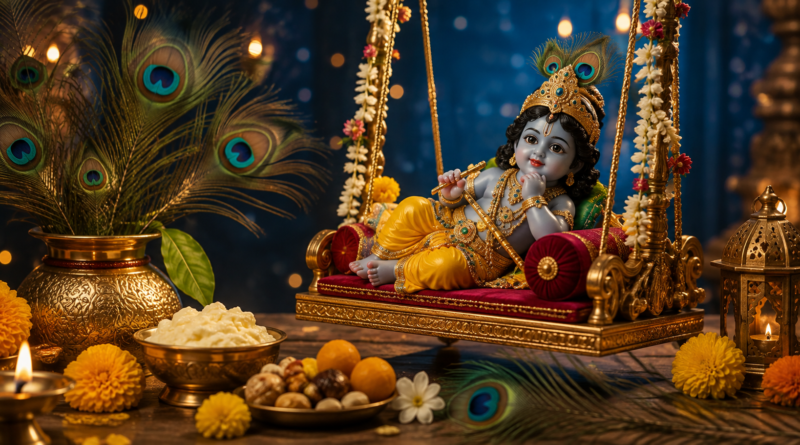
Krishna Janmashtami 2026: Date, Nishita Puja Muhurat, Vrat Rules, Puja Samagri and Lucky Colours
Krishna Janmashtami will be celebrated on September 4, 2026. This year, the festival is especially significant as Ashtami Tithi coincides with Rohini Nakshatra, while devotees prepare for midnight worship, fasting and the traditional birth celebration of Lord Krishna.
Krishna Janmashtami is being celebrated across India on Friday, September 4, 2026, marking the birth anniversary of Lord Krishna. The festival is observed on the Ashtami Tithi of Krishna Paksha in the month of Bhadrapada and is traditionally associated with midnight celebrations because Krishna is believed to have been born during the Nishita period.
This year, there has been some confusion over whether Janmashtami falls on September 4 or September 5. According to the Panchang timings cited by Aaj Tak, the Ashtami Tithi begins at 2:25 AM on September 4 and ends at 12:13 AM on September 5. Since the midnight birth observance falls on September 4, the main Janmashtami celebration will be observed that day.
Janmashtami 2026: Why Is September 4 the Main Date?
The date of Janmashtami is not determined simply by which day the Ashtami Tithi begins. The festival’s central ritual commemorates Krishna’s birth at midnight, so the presence of Ashtami during the Nishita period is particularly important.
This year, the Rohini Nakshatra also adds significance to the occasion. Aaj Tak reports that Rohini begins around 12:29 AM on September 4 and continues through the night, creating an alignment that devotees consider particularly meaningful for Krishna’s birth celebration.
The combination is one reason devotees are paying particular attention to the midnight puja this year.
Krishna Janmashtami 2026 Nishita Puja Muhurat
The most important ritual of Janmashtami is the Nishita Kaal Puja, performed around midnight to symbolically celebrate Krishna’s birth.
According to the timings reported by Aaj Tak, the main puja window on September 4 is:
Nishita Puja Muhurat: 11:57 PM to 12:43 AM
This gives devotees approximately 46 minutes for the midnight worship.
Devotees typically use this period for Krishna’s abhishek, dressing and decorating the idol, offering bhog, performing aarti and celebrating the symbolic birth of the deity.
Because exact timings can vary by location and Panchang, devotees observing strict traditional rituals should check the timings applicable to their city.
Janmashtami 2026 Puja Vidhi
The celebration usually begins in the morning with cleanliness, prayer and preparation for the evening rituals.
A traditional home puja can include the following steps:
- Wake up early, bathe and wear clean clothes.
- Clean the puja area and prepare the place for Laddu Gopal.
- Take a sankalp for the Janmashtami vrat.
- Decorate the Krishna idol and prepare a small swing or jhula.
- Keep flowers, Tulsi leaves, peacock feathers and other puja items ready.
- At midnight, bathe the Krishna idol with Panchamrit.
- Rinse the idol with clean water and a few drops of Gangajal.
- Dress Krishna in fresh clothes and decorate him with jewellery, a crown and peacock feather.
- Apply sandalwood or roli tilak and offer flowers.
- Offer traditional bhog such as makhan-mishri, fruits, panchmeva and dhaniya panjiri.
- Place Laddu Gopal in the decorated swing.
- Chant Krishna mantras and perform aarti.
- Blow the conch to mark the symbolic birth celebration.
- Distribute prasad and charanamrit among family members.
These practices can differ according to family traditions, regional customs and individual sampradayas.
Janmashtami Puja Samagri List
Those preparing for the festival at home can keep the following items ready:
- Krishna or Laddu Gopal idol
- Panchamrit ingredients
- Milk, curd, honey, sugar and ghee
- Gangajal
- Roli and sandalwood
- Akshat
- Tulsi leaves
- Flowers, especially yellow flowers
- Peacock feather
- Small flute
- New clothes for Laddu Gopal
- Garland and jewellery
- Makhana and dry fruits
- Makhan-mishri
- Dhaniya panjiri
- Fruits and sweets
- Ghee diya
- Cotton wicks
- Incense sticks
- Camphor
- Conch shell
- Puja thali
- A decorated jhula or swing
Daily Jagran’s Janmashtami guide also highlights makhan-mishri, dhaniya panjiri, Panchamrit, Tulsi leaves, peacock feathers, flute and yellow flowers among the commonly used items for the celebration.
What to Eat During the Janmashtami Vrat?
Many devotees observe a fast throughout Janmashtami and break it according to their family’s tradition and the applicable religious timings.
Common vrat-friendly foods include:
- Fruits
- Milk and curd
- Buttermilk
- Makhana
- Sabudana
- Kuttu
- Potatoes and sweet potatoes
- Dry fruits
- Other fasting foods permitted by individual traditions
Foods generally avoided during the fast include regular grains such as wheat and rice, pulses, gram flour, onion and garlic. Non-vegetarian and traditionally tamasic foods are also avoided.
Three Common Types of Janmashtami Fast
Not every devotee follows the same type of vrat. Common forms include:
Nirjala Vrat
Devotees abstain from both food and water throughout the fasting period. This is considered a particularly strict form of fasting.
People who are children, elderly, pregnant, unwell or taking regular medication should not undertake a strict fast without appropriate professional guidance.
Phalahar Vrat
This is a more common form in which devotees consume fruits, milk, dry fruits and permitted fasting foods.
Ek Bhukta
Under this practice, a person eats only once during the day, following the food restrictions associated with the vrat.
Fasting practices vary considerably between families and traditions, so devotees should follow the method prescribed by their own religious tradition.
When Should the Janmashtami Fast Be Broken?
One of the most common questions surrounding Janmashtami is whether the fast can be broken immediately after the midnight puja.
According to the Daily Jagran guide, devotees following the traditional rule may wait until the relevant Ashtami Tithi and Rohini Nakshatra conditions have ended before performing Parana. The source notes that this can push the fast-breaking ritual into September 5.
Since Parana timings can vary according to location and tradition, devotees should check their local Panchang rather than relying on a single nationwide clock time.
Seven Krishna-Inspired Colours to Wear on Janmashtami
Janmashtami is also a colourful festival, and devotees often choose clothing inspired by Krishna’s traditional imagery and the landscapes associated with his stories.
Rediff highlights seven Krishna-inspired colours that can work particularly well for Janmashtami celebrations.
Yellow
Yellow has perhaps the strongest association with Krishna because of the traditional pitambar. It represents brightness, joy and the festive spirit of Janmashtami.
Blue
Blue is naturally associated with Krishna’s traditional depiction. It can also create a calm and elegant festive look.
Green
Green evokes the lush surroundings of Vrindavan and works well for devotees looking for a fresh, nature-inspired festive colour.
Pink
Pink can be associated with the tender and romantic imagery surrounding Radha-Krishna traditions and offers a softer festive look.
Orange
Orange brings a warm, energetic tone to Janmashtami celebrations and works particularly well for traditional festive outfits.
Red
Red offers a brighter, more dramatic festive appearance and can be paired with gold jewellery or traditional accessories.
Purple
Purple provides a more contemporary option for those who want to combine traditional inspiration with a modern festive style.
Janmashtami 2026 and the Special Planetary Alignment
Apart from its religious importance, Janmashtami 2026 has also attracted attention from astrology publications because of a reported Trigrahi Yog.
Aaj Tak’s astrology report says that the Sun, Moon and Jupiter will come together in the same sign, forming a Trigrahi Yog. In astrological tradition, the Sun is associated with confidence and success, Jupiter with knowledge and prosperity, and the Moon with the mind and emotional wellbeing.
Astrological interpretations are belief-based rather than scientifically established predictions, but they remain an important part of how many devotees understand auspicious dates and festivals.
Four Zodiac Signs Considered Favourable This Janmashtami
According to the Aaj Tak astrology report, four zodiac signs are expected to receive particularly favourable results from the planetary combination.
Taurus
Taurus natives may see opportunities related to finances, income and career. The report suggests that stalled money could return and new sources of income may emerge.
Cancer
For Cancer natives, the alignment is associated with confidence, family happiness and improved social standing. The report also suggests relief from mental pressure and the possibility of auspicious events at home.
Leo
Leo is ruled by the Sun, and the reported alignment is considered favourable for leadership, career development and professional recognition. The report also points to potentially favourable business and investment opportunities.
Sagittarius
Because Jupiter is the ruling planet of Sagittarius, the Trigrahi Yog is considered particularly significant for this sign. Students may benefit in their studies, while the report also associates the period with possibilities involving property, vehicles and legal matters.
These zodiac predictions are based on traditional astrological interpretations and should be treated as faith-based guidance rather than guaranteed outcomes.
Simple Janmashtami Practices at Home
For devotees who want to keep the celebration simple, a full-scale arrangement is not necessary.
Cleaning the puja space, decorating a small Krishna idol, offering Tulsi and makhan-mishri, chanting Krishna’s name and participating in the midnight aarti can form the core of a home celebration.
A commonly cited mantra for Krishna worship is:
“Om Namo Bhagavate Vasudevaya.”
Devotees may chant it during their prayers according to their personal tradition. Daily Jagran also lists this mantra among the practices associated with the midnight worship.
Why Janmashtami 2026 Is Special
Janmashtami is observed every year, but the 2026 celebration carries several features that devotees are highlighting.
The festival falls on September 4, while Ashtami Tithi and Rohini Nakshatra overlap around the midnight birth period. The Nishita Puja also provides a defined window for devotees to conduct the central worship.
For millions of devotees, however, the significance goes beyond planetary combinations or precise timings. Janmashtami is a celebration of Krishna’s birth, devotion, music, family traditions and the enduring spiritual themes associated with his life.
As homes and temples prepare for the midnight celebration, the familiar sound of bhajans, temple bells and conch shells will once again mark the arrival of Nand Lal.