
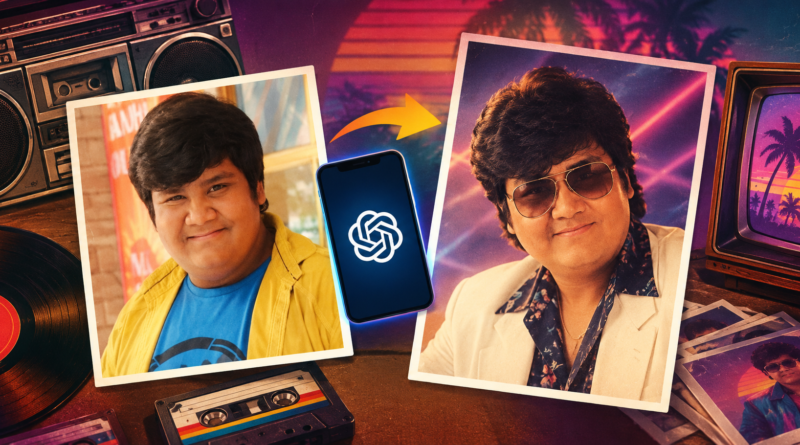
1980s AI Photo Trend Goes Viral on Instagram: Best ChatGPT Prompts to Create Retro Pictures
Instagram is witnessing a new wave of nostalgia 1980s AI Photo Trend; as users transform their modern photographs into glamorous 1980s-style portraits with the help of ChatGPT. Here’s how the viral AI trend works and some prompts you can try.
The 1980s are making a comeback on social media, but this time through artificial intelligence. A new 1980s AI photo trend is taking over Instagram, with users turning their contemporary photographs into images that appear to have been captured decades ago.
Instead of applying a simple vintage filter, users are uploading their photographs to ChatGPT and asking AI to recreate the entire visual style of the 1980s. Hairstyles, clothing, jewellery, lighting, backgrounds and even the texture of analogue film can be changed to create a convincing retro photograph.
The trend has also spread through Instagram Stories, where people are sharing their AI-generated portraits and encouraging friends to participate.
What Is the Viral 1980s AI Photo Trend?
The trend essentially asks a simple question: What would I have looked like if my photograph had been taken in the 1980s?
Users upload a clear image of themselves to ChatGPT and provide instructions describing the desired period aesthetic. AI then transforms the photograph while attempting to retain the person’s recognisable facial characteristics.
The results can range from old Bollywood-style studio portraits to family-album photographs, vintage magazine shoots and glamorous 1980s movie-inspired images.
What makes the trend different from an ordinary retro filter is the level of transformation. Instead of simply adding grain or changing the colour tone, AI can reinterpret the person’s outfit, hairstyle, accessories, surroundings and photographic style.
Why Is the 1980s Photo Trend Going Viral?
Nostalgia is one of the biggest reasons behind the trend’s popularity. The 1980s have a distinctive visual identity, particularly in Indian fashion and cinema.
Bright sarees, voluminous hairstyles, statement earrings, bold shirts, high-waisted trousers, dramatic studio lighting and analogue film textures are some of the elements users are recreating.
The trend also gives people a chance to imagine themselves in an era they may never have experienced personally.
A regular selfie can suddenly look like an old family photograph or a forgotten Bollywood studio portrait.
How to Create Your Own 1980s Photo Using ChatGPT
Creating the viral image is relatively simple.
Step 1: Choose a Clear Photo
Select a photograph where your face is clearly visible. A well-lit portrait generally gives AI more visual information to work with.
Step 2: Upload the Photo to ChatGPT
Open ChatGPT and upload the photograph you want to transform.
Step 3: Describe the 1980s Look
Instead of simply writing “make me look like I’m from the 1980s”, provide details about the clothes, hairstyle, background, lighting and photography style.
The more specific the instructions, the more control you have over the final appearance.
Step 4: Ask AI to Preserve Your Face
If you want the resulting image to remain recognisably you, explicitly ask the AI to preserve your facial characteristics and expression rather than completely redesigning the face.
Step 5: Refine the Image
If the first result doesn’t look sufficiently retro, you can ask for adjustments such as more authentic 1980s clothing, stronger film grain, a different hairstyle or a more realistic analogue-camera appearance.
Best ChatGPT Prompts for the 1980s AI Photo Trend
Here are some original prompts you can use to create different versions of the trend.
- Classic 1980s Indian Portrait
Transform my uploaded photo into a realistic 1980s Indian studio portrait. Keep my facial identity, facial proportions and natural expression recognisable. Change the styling to authentic 1980s Indian fashion, with period-appropriate clothing, voluminous hair and elegant statement accessories. Use warm studio lighting, soft focus, subtle analogue film grain and slightly faded colours. Make it look like a genuine photograph taken on an old film camera in India during the 1980s.
- Retro Bollywood Heroine Look
Reimagine my uploaded photograph as a glamorous 1980s Bollywood heroine portrait. Preserve my recognisable face and natural skin texture while changing the hairstyle, outfit and accessories to an authentic 1980s Indian cinema aesthetic. Add dramatic studio lighting, soft-focus photography, rich colours and realistic 35mm film grain. Avoid modern fashion, smartphones and contemporary objects.
- Old Family Album Photograph
Turn my photo into a realistic Indian family-album photograph from the mid-1980s. Keep my face and expression natural and recognisable. Give me period-appropriate clothing and hairstyle and place me in a simple traditional indoor setting. Use slightly faded analogue colours, natural lighting, mild film grain and the imperfections of an old printed photograph. Make it feel authentic rather than digitally filtered.
- 1980s Wedding Photography
Transform this photo into an authentic Indian wedding photograph from the 1980s. Preserve my facial identity while changing the clothing, hairstyle and jewellery to period-appropriate wedding fashion. Add a classic decorated wedding backdrop, warm flash photography, slightly soft focus and realistic analogue film grain. Make the photograph look like it came from an old family wedding album.
- Retro Magazine Cover Style
Recreate my uploaded photograph as a high-fashion Indian magazine portrait from the 1980s. Keep my facial features recognisable. Style the hair, clothing and accessories according to 1980s fashion, with bold but authentic colours and dramatic studio lighting. Use realistic analogue photography, subtle grain and soft highlights. The final image should look like an actual 1980s editorial photograph rather than a modern image with a vintage filter.
How to Make the AI Image Look More Authentic
Simply adding “1980s” to a prompt may not always produce the desired result. Adding specific photographic details can make the transformation more convincing.
You can mention:
- Analogue 35mm film
- Soft-focus photography
- Subtle film grain
- Warm studio lighting
- Slightly faded colours
- Period-appropriate hairstyles
- 1980s Indian clothing
- Vintage jewellery
- Old studio backdrop
- Natural skin texture
- Authentic film-camera imperfections
You can also tell the AI what not to include. For example, ask it to avoid smartphones, modern cars, contemporary clothing, LED lighting and other objects that would immediately make the photograph look modern.
Women Can Try These 1980s-Inspired Looks
The trend has become particularly popular for recreating retro Indian fashion.
Women can experiment with colourful sarees, traditional jewellery, large earrings, voluminous hairstyles and classic studio portraits. Different prompts can create the appearance of a Bollywood portrait, wedding photograph or everyday family picture.
The important part is to describe the desired styling rather than relying only on the word “vintage.”
Men Can Create Retro 1980s Portraits Too
The trend isn’t limited to women’s fashion.
Men can experiment with loose shirts, high-waisted trousers, classic hairstyles, vintage sunglasses and other period-inspired styling. A prompt can also specify an old Bollywood hero aesthetic, a family-album photograph or a casual 1980s studio portrait.
The same principle applies: preserve the person’s recognisable appearance while changing the surrounding visual elements.
1980s Bollywood vs Family Album: Which Style Looks Better?
There are two particularly popular directions for the trend.
| Style | Visual Look |
| Retro Bollywood | Glamorous styling, dramatic lighting, bold fashion and cinematic composition |
| Family Album | Simple clothing, natural expressions, indoor settings and authentic film texture |
| 1980s Wedding | Traditional outfits, jewellery, decorated backgrounds and flash photography |
| Vintage Magazine | Fashion-focused styling, studio lighting and polished composition |
| Everyday 1980s | Casual clothing, natural surroundings and candid photography |
The Bollywood version tends to look more dramatic, while the family-album approach can feel more believable and nostalgic.
Why Facial Preservation Matters
One of the biggest challenges with AI-generated portraits is maintaining the identity of the person in the original photograph.
A transformation can sometimes alter facial proportions, eyes, nose, hairstyle or other characteristics. That’s why prompts should clearly instruct the AI to retain the person’s recognisable facial structure and natural expression.
However, AI-generated images should still be checked carefully because even detailed instructions cannot guarantee perfect identity preservation every time.
Don’t Forget to Check the Final Image
Before sharing an AI-generated photograph on Instagram, look closely at the finished image.
Check the face, hands, jewellery, clothing patterns, background objects and any text. AI can sometimes introduce visual inconsistencies or details that don’t make sense.
It is also better to avoid uploading photographs containing private documents, personal information or other sensitive details.
Most importantly, an AI-generated 1980s portrait should be treated as a creative recreation rather than an authentic historical photograph.
How to Share the Trend on Instagram
Once the image is ready, users can share it on Instagram Stories or their feed. The trend has also been spreading through Instagram’s “Add Yours” feature, allowing users to invite friends and followers to create their own versions.
A simple caption such as “What would I look like in the 1980s?” can make the post part of the broader trend.
The 1980s Nostalgia Wave Is More Than Just a Filter
The popularity of the trend highlights how generative AI is changing the way people interact with old-fashioned aesthetics.
Earlier photo trends focused heavily on specific artistic styles. The current 1980s trend is different because it asks AI to reconstruct an entire era around a person’s existing photograph.
From Bollywood-inspired portraits and wedding albums to simple family photographs, users can now imagine an alternate version of their personal history with just a photograph and a detailed prompt.
For anyone wanting to join Instagram’s latest AI craze, the formula is simple: upload a clear photo, describe the decade in detail, preserve your identity and let AI recreate the nostalgia.