
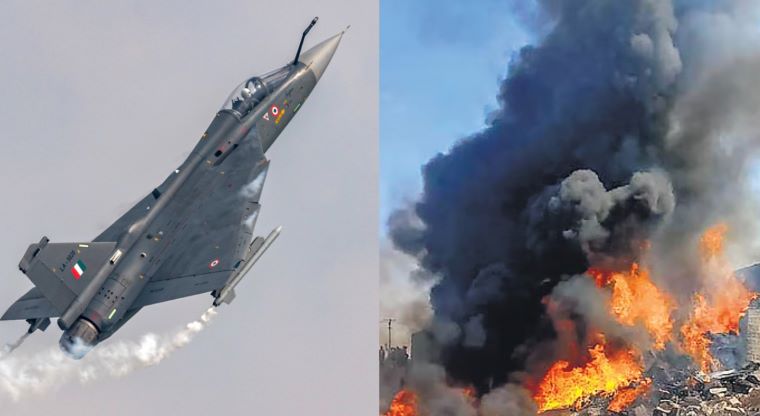
Another Tejas Fighter Jet Lost in Landing Accident; IAF Grounds Fleet and Probes Cause
The Indian Air Force (IAF) has suffered another setback with its indigenous Tejas Light Combat Aircraft (LCA) programme after one of the jets was severely damaged in a landing accident earlier this month. The pilot escaped safely without serious injuries, but the aircraft is expected to be written off, prompting intensified scrutiny of the platform and precautionary safety checks across the fleet.
What Happened in the Latest Tejas Accident
The incident occurred during the landing phase of a routine training sortie at a major forward airbase in early February. Sources involved in the investigation have indicated that the mishap may have been caused by a suspected brake failure as the aircraft approached the runway, causing it to run off the runway and into a ditch. Although the pilot ejected and landed safely, the extent of structural damage to the aircraft suggests it may be declared unserviceable and written off.
IAF Grounds Tejas Fleet for Safety Checks
In response to this latest accident — the third major incident involving the Tejas since 2024 — the Indian Air Force has reportedly grounded all operational Tejas aircraft as a precautionary measure while a detailed inspection and technical evaluation are carried out. The decision is aimed at identifying any possible systemic or maintenance issues that could risk pilot safety or future operations.
So far, the IAF has not released a formal public statement on the grounding or the specific findings, but officials are understood to be reviewing data and conducting safety reviews.
Tejas Programme Under Scrutiny
This recent mishap has intensified scrutiny of India’s flagship indigenous fighter programme. The Tejas aircraft involved in the accident was among the 32 single-seat LCAs already delivered to the Air Force by Hindustan Aeronautics Limited (HAL) under earlier contracts. Deliveries of the more advanced Tejas Mk1A variant — which feature upgraded avionics, weapon systems and radar suites — have been significantly delayed, missing multiple deadlines amid technical and supply-chain challenges.
The IAF has placed an order for 180 Tejas Mk1A jets, which are intended to modernise its fighter fleet. However, these aircraft have not yet been inducted due to ongoing certification, testing and integration requirements, raising concern as older fighter squadrons retire.
Previous Tejas Accidents
This latest loss of a Tejas marks the third such major incident:
- In March 2024, a Tejas crashed near Jaisalmer while returning from a firepower demonstration, but the pilot ejected safely.
- In November 2025, another Tejas crashed during a performance at the Dubai Airshow; tragically, the pilot was unable to eject and lost his life. An inquiry into that crash is still underway.
These incidents have placed added pressure on the defence establishment to address safety, training and platform reliability concerns alongside production and delivery timelines.
What the IAF Is Doing Next
The IAF has ordered a high-level court of inquiry to determine the exact cause of the most recent accident. At the same time, a comprehensive technical inspection of the entire Tejas fleet is underway to rule out systemic faults or recurring issues that might have contributed to the mishap.
Experts say such investigations are standard following serious accidents, particularly with indigenous platforms that continue to evolve. The grounding is aimed at eliminating risk before regular flying operations resume.
Broader Implications
The Tejas LCA represents a key element of India’s strategy to build self-reliant defence capabilities. While setbacks — including crashes and delays in Mk1A variant deliveries — have raised operational concerns, defence analysts emphasise that rigorous testing, inspection and corrective action are crucial to ensuring long-term safety and performance.
Delays in the production and induction of newer Tejas fighters have already affected fleet modernisation plans. The IAF has historically relied on older Soviet-era fighters and multi-role jets like the Sukhoi Su-30 for operational commitments. The planned addition of 180 Mk1A jets was intended to bolster indigenous strength, but delivery delays have created a capability gap that defence planners are keen to address promptly.
Conclusion
The Tejas accident and subsequent grounding of the fleet underscore the challenges of developing and deploying indigenous combat aircraft. While the pilot’s safe ejection is a relief, the structural loss of the aircraft and the grounding decision highlight the importance of ongoing investigations and safety assurance. With national defence readiness and future aircraft deliveries at stake, the IAF, HAL and associated agencies will be closely monitoring findings and working toward reinforcing operational safety and delivery schedules.