
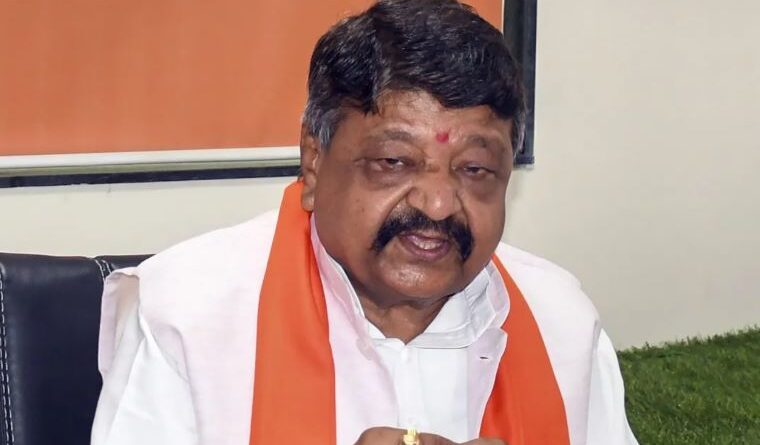
Madhya Pradesh Minister Kailash Vijayvargiya Apologises After Offensive Remark on Indore Water Contamination
A political controversy has erupted in Madhya Pradesh over comments made by senior BJP leader and state minister Kailash Vijayvargiya regarding the water contamination crisis in Indore that has been linked to multiple cases of severe illness and deaths due to diarrhoea. The minister’s initial remarks during a media interaction drew strong criticism for being insensitive and using an objectionable term, prompting a public apology later.
Background: Water Contamination Crisis in Indore
Indore has been grappling with a serious public health issue linked to contaminated drinking water. Several residents, particularly in low-lying areas, suffered from diarrhoea and related illnesses, some of which resulted in deaths. The situation sparked widespread concern among citizens and prompted questions about the quality of drinking water, civic infrastructure, and accountability of local agencies responsible for safe potable water.
Residents and health activists reported foul-smelling, discoloured water from taps in affected localities, raising alarms about contamination with pollutants and micro-organisms that cause gastrointestinal infections.
Minister’s Media Interaction and Controversial Comment
During a media interaction in Indore while addressing the water crisis, Kailash Vijayvargiya was asked about the reasons behind the contamination and deaths and how the government planned to respond effectively. In his initial response, the minister used an offensive and dismissive word that was widely regarded as inappropriate given the gravity of the situation.
His comment, meant perhaps to defend the government’s position or deflect criticism, instead drew immediate backlash from journalists present, political opponents, and social media users. Video clips of the interaction circulated widely, amplifying reactions and intensifying public scrutiny.
Journalist and Public Backlash
Journalists covering the press interaction took strong objection to Vijayvargiya’s language, confronting him and demanding clarification. Many reporters pointed out that such remarks were not only insensitive but also dismissive of the suffering of affected families who lost loved ones due to contaminated water.
Political opponents and civic activists also weighed in, saying that public representatives should exercise greater sensitivity and empathy, particularly when addressing crises that involve loss of life and widespread public health distress.
Social media platforms were filled with critical comments, with citizens calling for accountability and demanding that leaders respond thoughtfully and compassionately when addressing issues of public concern.
Apology and Subsequent Clarification
Faced with mounting criticism, Kailash Vijayvargiya later issued a formal apology, acknowledging that his remark was inappropriate and regrettable. He stated that his comment was made in the heat of the moment and affirmed that he did not intend to offend anyone or undermine the seriousness of the water contamination issue.
In his apology, the minister expressed respect for the media and reiterated the government’s commitment to resolving the contamination problem. He emphasised that efforts were underway to provide clean drinking water, investigate the causes of the outbreak, and support affected residents.
Officials from the Indore Municipal Corporation and state health department also addressed the situation, assuring citizens that testing of water sources, distribution lines and corrective measures were being prioritised to prevent further public health fallout.
Political and Public Reactions After the Apology
Although the apology was noted, reactions remain mixed. Some journalists and commentators accepted the regret, while others maintained that public figures must be held to higher standards of communication — especially during crises. Critics pointed out that an apology alone is not enough if systemic issues — like governance and infrastructure failures — remain unaddressed.
Political commentators noted that such controversies can distract from the urgent need to focus on technical solutions — ensuring safe water supply, infrastructure improvement, and transparent communication with the public.
Meanwhile, residents impacted by the water issue are still awaiting clear timelines and assurances regarding long-term corrective action.
Conclusion: Sensitivity and Accountability in Public Communication
The Indore water contamination crisis has underscored not only infrastructure gaps but also the importance of sensitive and responsible communication from public representatives. While Kailash Vijayvargiya’s apology has sought to address concerns over his choice of language, many are urging that attention now be fully directed toward solving the root causes of the contamination and preventing further harm.
As investigations and remediation efforts continue, the incident serves as a reminder that leaders must balance defence of policy with empathy toward affected communities — especially where public health and human lives are concerned.