
NASA Troubleshooting Artemis II Rocket Upper Stage Issue, Preparing to Roll Back
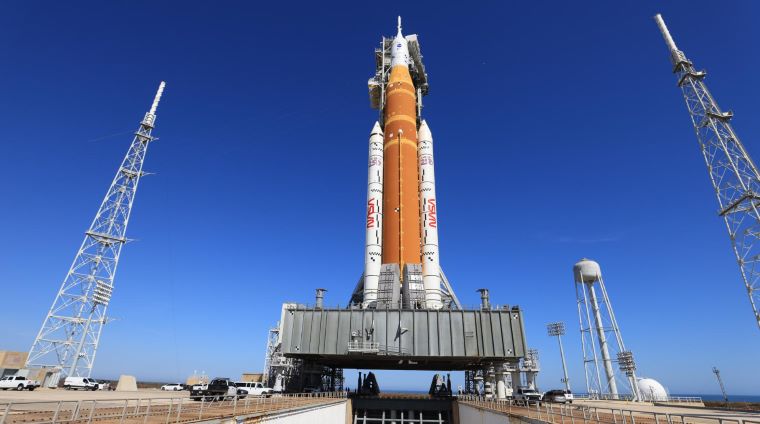
NASA has revealed that it is currently troubleshooting a problem with the upper stage of the Artemis II rocket — a critical step as the agency prepares for its first crewed lunar mission in decades. The issue involves an interrupted helium flow in the interim cryogenic propulsion stage of the Space Launch System (SLS), a component essential for launch operations. Engineering teams are reviewing data and preparing options to address the problem, including the possibility of rolling the rocket and Orion spacecraft back to the Vehicle Assembly Building (VAB) at the Kennedy Space Center for further inspection and repairs. This development is likely to impact the mission’s planned March launch window.
What Happened and Why It Matters
The helium flow anomaly was detected during pre-launch operations at Launch Complex 39B, where the rocket stands vertical on the pad. Helium is used in the cryogenic propulsion stage to maintain the proper pressure necessary for safe and successful fueling and engine operations. When that flow becomes irregular, it can jeopardise the ability to fuel the rocket and complete final launch preparations.
In response, NASA is evaluating multiple troubleshooting paths. One option is to remove pad access platforms and prepare the rocket for a possible rollback to the VAB, where engineers can address the concern in a more controlled environment. The rollback decision would depend on what the data review shows and how quickly crews can resolve the issue on the pad itself.
How the Issue Impacts Artemis II’s Launch Schedule
The Artemis II mission — NASA’s first crewed flight around the Moon under its Artemis programme — had been targeting a March 6, 2026 launch, according to recent agency planning and successful wet dress rehearsals that tested fueling and countdown procedures. However, this newest technical problem has raised questions about whether the mission can still meet that timeframe.
If rollback becomes necessary, it could push the launch later in March or even into April, depending on how long the repairs and retesting take. Officials have emphasised that crew safety and mission readiness continue to be the top priorities, and that schedule changes may be required to ensure both.
Background: Recent Wet Dress Rehearsal Progress
Earlier this month, NASA completed a second wet dress rehearsal, a full countdown and fuel loading exercise that successfully loaded hundreds of thousands of gallons of super-cold propellant into the Space Launch System without the hydrogen leaks that delayed an earlier attempt. This was considered a key milestone in preparing the rocket for launch, and set the stage for NASA to begin final systems reviews and safety checks.
However, while that rehearsal tested many aspects of the rocket and ground systems, the helium flow concern now requires further analysis before the final “Flight Readiness Review” can be certified and a formal launch date locked in.
What’s Next: Troubleshooting and Planning
NASA teams are currently:
- Analysing telemetry and sensor data to understand the helium flow irregularity.
- Preparing contingency operations at both the pad and the VAB as needed.
- Reviewing ground system logistics, including removal of pad access platforms.
- Conducting additional safety and system checks once the problem area is isolated.
Engineers will determine whether the issue can be resolved on the pad or whether rolling the rocket back into the VAB is the most effective course.
Why Artemis II Is Important
Artemis II represents a historic milestone — it will carry four astronauts, including a Canadian Space Agency astronaut, on a 10-day journey around the Moon and back. It marks the first time humans will travel beyond low-Earth orbit since the Apollo missions of the 1970s, and sets the stage for Artemis III, which aims to land the next astronauts on the lunar surface.
Despite delays and technical challenges, NASA’s leadership and mission managers remain focused on ensuring all systems are fully tested and safe before committing to a launch — an approach that underscores the complexities of deep-space human exploration.
Summary
NASA’s Artemis II mission, a key step in human lunar exploration, faces a technical challenge involving the upper stage of its SLS rocket. Engineering teams are reviewing the issue and preparing for possible rollback to the Vehicle Assembly Building if necessary. This concern could affect the mission’s planned March launch, but officials stress that thorough troubleshooting and safety reviews will guide next steps.