
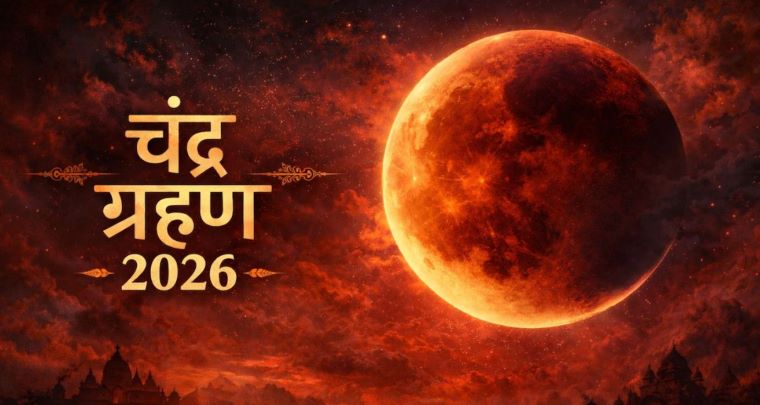
Chandra Grahan (Lunar Eclipse) 2026: Date, Timings, Sutak Kaal, Rituals & Vastu Tips
A Chandra Grahan (lunar eclipse) will be visible from India and several parts of the world on Tuesday, March 3, 2026. Lunar eclipses are significant astronomical and cultural events in India, often associated with various religious observances, traditional beliefs and Vedic rituals.
What Is a Chandra Grahan?
A lunar eclipse occurs when the Earth comes between the Sun and the Moon, casting its shadow on the Moon. During this alignment, the Moon can take on a reddish hue, often referred to as a “Blood Moon,” due to the Earth’s atmosphere bending sunlight.
In many Indian traditions, a Chandra Grahan is considered an auspicious yet spiritually potent time. Special precautions, rituals and observances are followed by devotees across religious communities.
Date and Key Timings for India
- Date: Tuesday, March 3, 2026
- Sutak Kaal Begins: Evening of March 2, ahead of the eclipse
- Eclipse Begins: Late night of March 3
- Maximum Eclipse: Early hours of March 3
- Eclipse Ends: Early morning of March 3
(Exact local times vary by region and should be confirmed with trusted astronomical calendars or local panchangs.)
Understanding Sutak Kaal
Sutak Kaal is the period of time before the eclipse when it is believed that spiritual energy becomes potent and “impure” influences may intensify. Traditional guidelines recommend:
- Starting Sutak Kaal several hours before the eclipse begins
- Avoiding new beginnings such as starting journeys, new projects, signing important documents, or major purchases
- Maintaining spiritual focus — increasing prayer, mantra chanting or meditation
Sutak Kaal is considered a preparation phase that ends once the eclipse fully begins.
Traditional Observances During Chandra Grahan
Many devotees follow these practices during a lunar eclipse:
1. Fasting or Partial Fasting
Some people observe a fast (up to the time of the eclipse or throughout the eclipse period) as a form of purification.
2. Mantra Chanting and Prayer
Reciting sacred mantras (such as the Gayatri Mantra, Maha Mrityunjaya Mantra, or Hanuman Chalisa) is considered beneficial.
3. Reading Scriptures
Devout followers may read holy texts such as the Ramayana or Bhagavad Gita during the eclipse to deepen spiritual focus.
4. Staying Indoors
According to traditional belief, people are advised to stay indoors during the peak hours of the eclipse, especially avoiding direct observation of the Moon with the naked eye.
5. Ritual Bathing (Snana)
After the eclipse, many communities perform a cleansing bath, often at sunrise, to symbolise purification and renewal.
Vastu and Home Precautions During Chandra Grahan
Many households observe Vastu and traditional practices around lunar eclipses, including:
- Avoid placing water or vessels in open areas during the eclipse
- Cover food items and utensils to prevent “negative energy” entering the household
- Clean the home or perform light tidying before the eclipse begins
- Keep spiritual symbols or sacred text in the prayer area
- Avoid sleeping during the active phase of the eclipse
After the eclipse, it is often recommended to clean floors and doors with fresh water and a mild cleansing agent, symbolising removal of inauspicious influences.
Cultural and Religious Significance
Chandra Grahan has deep roots in Indian culture and mythology. In various Hindu traditions, eclipses are linked with celestial events involving the demon Rahukaal, whose shadow causes the eclipse. Rituals around eclipses are intended to protect spiritual well-being and align oneself with cosmic rhythms rather than fear the event itself.
Health and Modern Perspectives
From an astronomical standpoint, lunar eclipses are natural occurrences caused by the Earth’s orbit and shadow. Modern astronomy encourages safe viewing of lunar eclipses with the naked eye or through telescopes, as there is no physical harm in observing a lunar eclipse.
However, traditional beliefs and cultural practices continue to be observed by millions, blending astronomy with spiritual meaning and community customs.
Conclusion
The Chandra Grahan of March 3, 2026 is both a significant celestial event and a moment of cultural observance for many in India and around the world. With timing, sutak kaal and traditional practices observed, devotees use this period for reflection, prayer and purification.
Whether one follows the event for religious, cultural or scientific reasons, a lunar eclipse remains a fascinating interplay between cosmic mechanics and human meaning.