
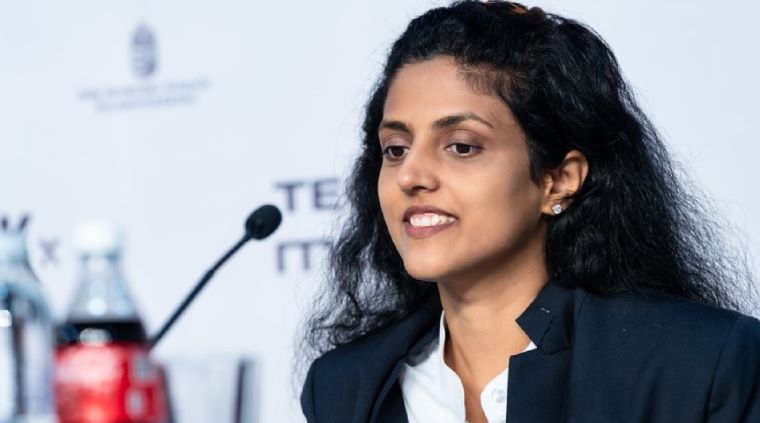
Harika Dronavalli Breaks Silence on ‘Namaste’ Controversy: What Really Happened at Grenke Chess Event
Indian chess Grandmaster Harika Dronavalli recently found herself at the center of a viral controversy after an unusual greeting exchange during an international chess match. The incident, which involved an Uzbek opponent opting for a “Namaste” instead of a handshake, sparked widespread debate across social media and the global chess community.
Now, Harika has finally addressed the issue, clarifying her stance and putting an end to speculation.
What Happened at the Chess Event?
The incident took place during the Grenke Freestyle Open in Germany. After the game, Harika extended her hand as per standard chess etiquette. However, her opponent—reportedly Uzbek Grandmaster Nodirbek Yakubboev—responded with a respectful “Namaste” gesture instead of a handshake.
The moment quickly went viral, with videos circulating widely on social media platforms. While many viewed it as a cultural gesture, others questioned whether it was a breach of traditional sportsmanship norms.
Why Did the Controversy Start?
In professional chess, a handshake before and after a match is considered a symbol of mutual respect. The deviation from this practice triggered mixed reactions:
- Some criticized the move as disrespectful
- Others praised it as a culturally inclusive gesture
- Social media debates intensified, with opinions divided globally
The situation escalated as people began interpreting the gesture differently—some even linking it to personal or political undertones.
Harika Dronavalli’s Response
Breaking her silence, Harika clarified that the situation was misunderstood and blown out of proportion.
She emphasized that:
- The “Namaste” gesture is equally respectful as a handshake
- There was no intention of disrespect from either side
- Cultural differences should be respected in international events
Harika also pointed out that athletes often have personal comfort zones, especially in a post-pandemic world where physical contact is sometimes avoided.
Her response shifted the narrative from controversy to a broader discussion about cultural diversity in sports.
Cultural Perspective: Handshake vs Namaste
The incident highlighted an important global conversation:
- Handshake → Common in Western cultures, symbolizing agreement and respect
- Namaste → Traditional Indian greeting, showing humility and respect without physical contact
In recent years, especially after COVID-19, “Namaste” has gained global acceptance as a safe and respectful alternative.
Many experts and fans supported the idea that sports should embrace cultural inclusivity rather than rigid traditions.
Social Media Reactions
The internet was divided into two major camps:
Supportive Voices:
- Praised the gesture as respectful and culturally rich
- Highlighted the importance of personal boundaries
- Called it a “beautiful moment of global diversity”
Critical Voices:
- Argued that chess has established etiquette
- Felt deviation from handshake tradition was unnecessary
Despite the debate, the incident ultimately sparked a positive global discussion about respect, consent, and cultural awareness.
Who is Harika Dronavalli?
Harika Dronavalli is one of India’s top chess players and a highly respected figure in international chess.
- Grandmaster title achieved in 2011
- Multiple World Championship medalist
- Part of India’s gold-winning team at the 2024 Chess Olympiad
Her calm and mature response to the controversy further strengthened her reputation as a professional and composed athlete.
Bigger Message from the Incident
This controversy goes beyond just a handshake. It reflects:
- The need for cultural sensitivity in global sports
- Respect for personal choices and boundaries
- Evolution of traditions in a modern, diverse world
In an increasingly globalized sporting environment, such moments serve as reminders that respect can be expressed in different ways.
Conclusion
The Harika Dronavalli “Namaste” controversy may have started as a viral moment, but it ended as a meaningful conversation about culture, respect, and modern sportsmanship.
As Harika herself clarified, the gesture was never about disrespect—it was about mutual understanding and personal comfort. In the end, the incident highlighted how small moments can spark big conversations in today’s digital world.