
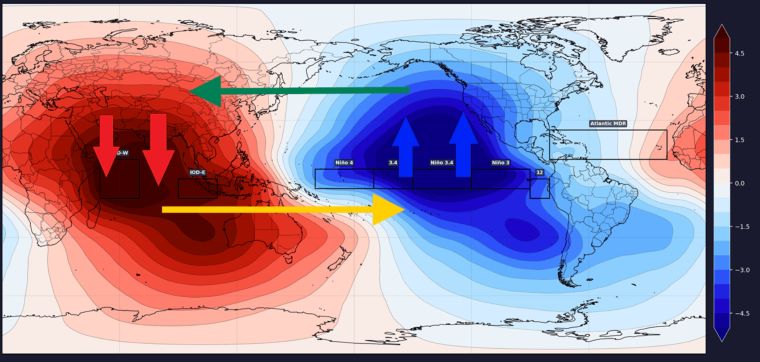
Super El Niño Warning: Why Scientists Say The World Should Prepare Early
Scientists and climate experts are warning that a powerful “Super El Niño” event could develop later this year, potentially becoming one of the strongest weather phenomena seen in decades. While experts say it is still too early to confirm the exact intensity, growing climate indicators suggest the possibility of severe global weather disruptions, including droughts, floods, extreme heatwaves, and agricultural challenges.
The development is being closely monitored because El Niño events can significantly impact weather patterns across countries including India, the United States, Australia, and parts of Africa and South America.
What Is El Niño?
El Niño is a natural climate phenomenon caused by the warming of sea surface temperatures in the central and eastern Pacific Ocean.
This warming changes global atmospheric circulation and affects:
- Rainfall patterns
- Monsoon systems
- Cyclones
- Heatwaves
- Agricultural productivity
El Niño events usually occur every few years, but some become extremely powerful and are referred to as “Super El Niño” events.
Why Scientists Are Concerned About A “Super El Niño”
According to climate researchers, current ocean temperature trends resemble conditions seen before some of history’s strongest El Niño events.
Experts cited in recent reports say:
- Pacific Ocean temperatures are rapidly increasing
- Atmospheric signals are strengthening
- Climate models are pointing toward a stronger-than-normal event.
- Some scientists believe this could potentially become the strongest El Niño event since the late 19th century if warming continues at the current pace.
However, researchers also caution that forecasting exact intensity months in advance remains difficult.
Why India Is Closely Watching The Situation
India’s economy and agriculture are heavily dependent on the monsoon season.
Climate experts warn that El Niño conditions often weaken the Indian monsoon, which can lead to:
- Below-normal rainfall
- Drought-like situations
- Reduced crop production
- Water shortages
- Higher food inflation.
At the same time, some regions may also experience:
- Intense short-duration rainfall
- Urban flooding
- Cyclone-related risks
Scientists say climate change is making weather patterns more unpredictable and extreme.
Possible Impact On Indian Monsoon
Meteorologists are particularly concerned about:
- Delayed monsoon arrival
- Uneven rainfall distribution
- Long dry spells between rain periods
This could severely affect:
- Agriculture
- Drinking water supply
- Rural economies
- Food prices
Crops like:
- Rice
- Wheat
- Sugarcane
- Pulses
may face production risks if rainfall remains weak.
Cities Could Also Face Flood Risks
Interestingly, El Niño does not always mean less rainfall everywhere.
Some urban regions may experience:
- Sudden heavy rain
- Cloudbursts
- Flash floods
- Drainage failures
Reports suggest cities like Chennai remain vulnerable because changing climate systems can intensify extreme rain events even during weak monsoon years.
Experts say modern climate behavior is becoming increasingly complex due to global warming.
Global Humanitarian Concerns
A strong El Niño can impact millions of people worldwide.
Scientists warn that severe events may trigger:
- Crop failures
- Food shortages
- Wildfires
- Water crises
- Heat-related illnesses
- Economic disruption.
Countries already vulnerable to climate stress may face the highest risks.
International aid organizations are reportedly monitoring the situation closely because extreme climate events often worsen:
- Poverty
- Migration
- Public health challenges
across developing regions.
Why Forecasting El Niño Is Difficult
Climate scientists say predicting El Niño months in advance remains challenging because:
- Ocean systems are highly dynamic
- Atmospheric conditions change rapidly
- Climate change is altering historical patterns
Some experts say:
It is too early to forecast a Super El Niño with certainty, but not too early to prepare.
This is why governments and weather agencies are being advised to remain prepared rather than wait for confirmation.
Role Of Climate Change
Scientists believe climate change may amplify the effects of El Niño events.
Rising global temperatures can increase:
- Ocean heat accumulation
- Atmospheric moisture
- Frequency of extreme weather events
This combination may intensify:
- Heatwaves
- Heavy rainfall events
- Drought severity
around the world.
Researchers say recent years have already shown how climate systems are becoming more volatile.
What Governments May Need To Prepare For
Experts suggest governments should focus on:
- Water conservation planning
- Crop protection strategies
- Flood preparedness
- Heatwave response systems
- Emergency food supply management
Early planning could reduce economic and humanitarian damage if a strong El Niño develops later this year.
What Citizens Can Expect
For ordinary people, a major El Niño event could eventually affect:
- Food prices
- Electricity demand
- Water availability
- Summer heat intensity
- Travel disruptions
Farmers and weather-dependent industries are expected to monitor monsoon forecasts especially closely in coming months.
Conclusion
While scientists are still uncertain whether a full-scale “Super El Niño” will definitely occur, climate indicators suggest the risk is growing significantly.
For India and many other countries, the phenomenon could influence:
- Monsoon rainfall
- Agriculture
- Inflation
- Water resources
- Extreme weather patterns
Experts say the biggest priority right now is preparedness, as the humanitarian and economic consequences of a major El Niño event could be severe if governments and communities fail to plan ahead.