Udhayanidhi Stalin Questioned, Released on Station Bail as Political Row Escalates
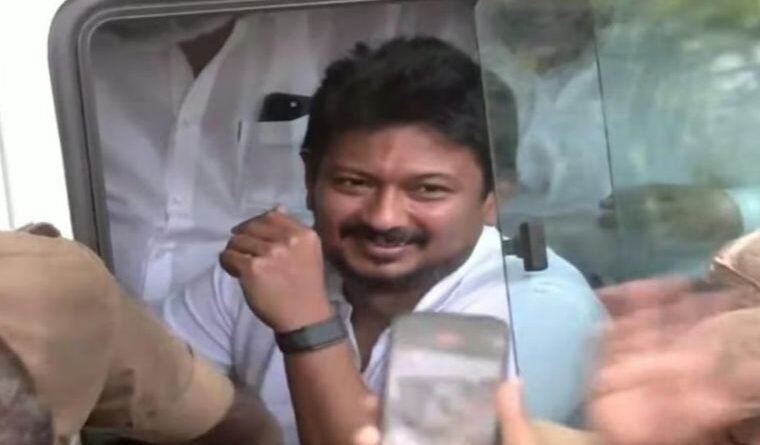
Tamil Nadu witnessed heightened political tensions after DMK leader and Leader of the Opposition Udhayanidhi Stalin was detained by police on August 4, 2026, questioned in connection with a case over his alleged remarks, and later released on station bail following directions from the Madras High Court. The incident triggered protests by DMK workers and sharp reactions from leaders across the political spectrum.
Why Was Udhayanidhi Stalin Detained?
Police detained Udhayanidhi Stalin in connection with a complaint regarding allegedly objectionable remarks he made during a public event. Authorities stated that the purpose of the detention was to question him as part of the investigation.
During proceedings before the Madras High Court, the Tamil Nadu government informed the court that it did not intend to seek his remand and only wanted to complete questioning.
Released After Police Questioning
Following several hours of questioning, Udhayanidhi Stalin was released on station bail.
The Madras High Court directed the police to complete the questioning and release him the same day, while also asking him to cooperate with the ongoing investigation whenever required.
Protests Erupt Across Tamil Nadu
The detention sparked demonstrations by DMK supporters in several parts of Tamil Nadu.
Party workers gathered outside police stations and other locations, alleging that the action was politically motivated. Security was tightened in sensitive areas to maintain law and order.
M.K. Stalin Calls Action ‘Political Vendetta’
DMK president M.K. Stalin strongly criticised the detention of his son and party colleague, accusing the state government of using police action to target the opposition.
He questioned why the inquiry could not have been conducted in Chennai and described the case as an attempt to intimidate political opponents.
Reactions from Other Political Leaders
The incident drew responses from leaders across party lines.
- Anbumani Ramadoss (PMK) criticised both the alleged remarks and the decision to arrest Udhayanidhi, saying both could have been avoided. He urged political leaders to adopt a more constructive approach.
- According to reports, other political figures also commented on whether the remarks were appropriate while questioning the need for an arrest, adding to the wider political debate.
What the High Court Said
During the hearing, the Madras High Court noted the government’s submission that it only wanted to question Udhayanidhi Stalin.
Based on this assurance, the court directed that he be released after questioning and asked him to cooperate with investigators in the future.
Political Significance
The episode has intensified the confrontation between the ruling government and the opposition in Tamil Nadu.
With both sides accusing each other of misusing institutions and escalating political rhetoric, the case is expected to remain a key issue in the state’s political discourse in the coming weeks.
Conclusion
The detention and subsequent release of Udhayanidhi Stalin has become one of the most significant political developments in Tamil Nadu this week. While the government says the action was part of a lawful investigation, the DMK has termed it politically motivated. The legal proceedings are expected to continue, and the issue is likely to remain under close public and political scrutiny.
Frequently Asked Questions (FAQs)
1. Why was Udhayanidhi Stalin detained?
He was detained for questioning in connection with a case involving allegedly objectionable remarks made during a public event.
2. Was Udhayanidhi Stalin arrested or released?
He was detained, questioned by police, and later released on station bail after the Madras High Court directed his release.
3. What did the Madras High Court order?
The court directed police to complete the questioning and release Udhayanidhi Stalin the same day while asking him to cooperate with the investigation.
4. How did the DMK respond?
The DMK alleged that the detention was politically motivated, with party president M.K. Stalin accusing the government of targeting the opposition.
5. What was Anbumani Ramadoss’ reaction?
PMK leader Anbumani Ramadoss criticised both the alleged remarks and the arrest, saying the situation could have been avoided and calling for more responsible political conduct.