
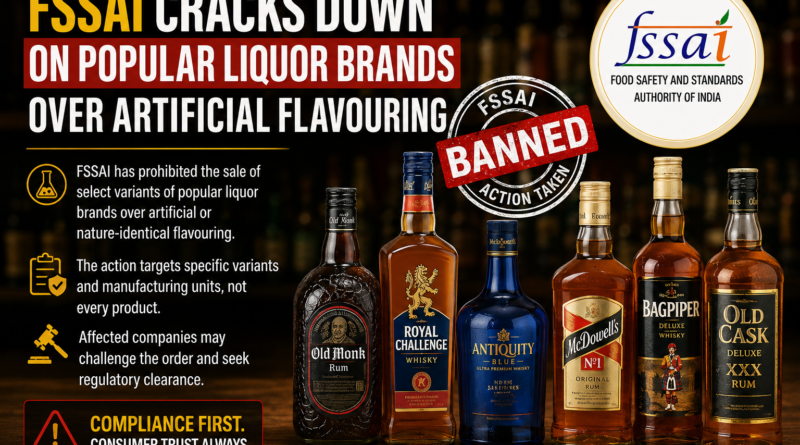
FSSAI Cracks Down on Popular Liquor Brands Over Artificial Flavouring
The Food Safety and Standards Authority of India (FSSAI) has prohibited the sale of select variants of several well-known liquor brands, including Old Monk, Royal Challenge, McDowell’s No. 1, Antiquity Blue, Bagpiper, and Old Cask. The regulator said laboratory testing found the use of artificial or nature-identical flavouring substances in products that, under Indian standards, are expected to derive their flavour primarily from natural ingredients and the ageing process.
The move is part of FSSAI’s broader effort to strengthen compliance with food safety and labelling regulations in the alcoholic beverages industry.
Why Did FSSAI Ban These Products?
According to FSSAI, certain whisky and rum variants contained artificial or nature-identical flavouring used to imitate the taste and aroma that should naturally develop during production and ageing.
The regulator stated that this manufacturing practice does not comply with the applicable food standards for these categories of alcoholic beverages, leading to the affected products being classified as sub-standard under food safety regulations.
Which Brands Are Affected?
The action applies to selected variants, not every product sold under these brand names.
Brands mentioned in reports include:
- Old Monk (selected rum variants)
- Royal Challenge Whisky
- Antiquity Blue Whisky
- McDowell’s No. 1 Rum (selected variants)
- Bagpiper Deluxe Whisky
- Old Cask Deluxe XXX Rum
Reports indicate that the order is linked to products manufactured at specific facilities, and the exact scope may vary depending on the manufacturing unit and state.
Is Every Old Monk or Royal Challenge Product Banned?
No.
The action does not amount to a nationwide ban on every bottle sold under these brands.
Instead, it targets specific variants and manufacturing batches/facilities identified during regulatory inspections. Consumers should not assume that all products from these brands are affected.
What Does “Artificial Flavouring” Mean?
In this context, artificial or nature-identical flavouring substances are ingredients added to recreate the aroma or taste typically achieved through traditional production methods.
FSSAI’s position is that certain whisky and rum categories should obtain their flavour characteristics naturally through approved ingredients and maturation rather than through added flavouring agents.
How Have the Companies Responded?
According to reports, United Spirits (Diageo India) has challenged the regulatory action in court, arguing that its products comply with existing labelling requirements and that the issue has broader implications for the alcoholic beverage industry.
Other affected manufacturers are also reviewing the order and evaluating their legal and regulatory options.
Does This Mean the Products Are Unsafe?
The regulatory action is based on compliance with food standards and manufacturing regulations, not on a finding that the products pose an immediate health risk.
FSSAI’s concern relates to whether the products meet the prescribed standards for their category and how they are manufactured and labelled.
What Happens Next?
The affected manufacturers may:
- Challenge the order through legal proceedings.
- Modify manufacturing practices if required.
- Seek regulatory clearance after addressing compliance issues.
The final outcome will depend on ongoing legal and regulatory processes.
Why This Action Matters
India is one of the world’s largest alcoholic beverage markets. The latest enforcement action highlights FSSAI’s increasing scrutiny of manufacturing standards, product composition, and labelling across the food and beverage sector.
Industry experts believe the decision could lead to stricter quality control and clearer compliance requirements for alcoholic beverage manufacturers in the future.
Conclusion
FSSAI’s latest action affects selected variants of popular liquor brands, including Old Monk, Royal Challenge, Antiquity Blue, McDowell’s No. 1, Bagpiper, and Old Cask, over alleged use of artificial or nature-identical flavouring that does not comply with applicable standards. The order focuses on regulatory compliance rather than a blanket ban on all products from these brands, and the affected companies are expected to continue pursuing legal and regulatory remedies.
Frequently Asked Questions (FAQs)
1. Why did FSSAI ban certain liquor brands?
FSSAI said laboratory tests found the use of artificial or nature-identical flavouring in selected whisky and rum variants that are required to derive their flavour through natural production and ageing processes.
2. Which liquor brands are affected?
Selected variants of Old Monk, Royal Challenge, Antiquity Blue, McDowell’s No. 1, Bagpiper, and Old Cask are among the products covered by the action.
3. Has FSSAI banned every Old Monk or Royal Challenge product?
No. The action applies to specific variants and manufacturing units, not every product sold under these brand names.
4. Are the affected products considered unsafe?
The regulator’s action concerns compliance with food standards and manufacturing rules. Reports do not state that the products were banned because they were found to pose an immediate health risk.
5. Can the affected companies challenge the order?
Yes. Reports indicate that at least one major manufacturer has already challenged the regulatory action in court, and further legal proceedings are expected.