
Parliament Special Session 2026: Women’s Reservation Bill, Delimitation Debate and Key Highlights
India’s Parliament began a crucial three-day special session on April 16, 2026, with the Women’s Reservation Bill and delimitation reforms at the center of national debate. The session is being seen as one of the most significant political developments of the year, as the government moves to operationalise the long-pending 33% reservation for women in the Lok Sabha and state assemblies.
What Is the Women’s Reservation Bill?
The Women’s Reservation law, originally passed in 2023 as the Nari Shakti Vandan Adhiniyam, provides 33% reservation for women in the Lok Sabha and state legislative assemblies.
However, its implementation was linked to:
- a fresh census
- delimitation of constituencies
- redistribution of parliamentary seats
The current special session focuses on constitutional amendments to ensure the law can be implemented in time for the 2029 general elections.
Why This Session Is Important
The government has introduced three amendment bills aimed at converting the 2023 law into an implementable framework.
Key proposals include:
- operational rules for women’s reservation
- delimitation after the 2026 census
- increase in Lok Sabha seat strength
- rotational reservation of constituencies
This is being viewed as a major step toward increasing women’s participation in national politics.
PM Modi’s Statement
Prime Minister Narendra Modi said that 50% of the country’s population must be part of decision-making, highlighting the government’s push for women’s empowerment.
He described the move as a historic step for Nari Shakti and national development.
Opposition vs Government: Delimitation Sparks Debate
While most parties support women’s reservation in principle, the delimitation clause has triggered strong debate.
Opposition leaders raised concerns that seat redistribution based on population may affect the balance between northern and southern states.
Leaders from southern states and Kerala in particular argued that delimitation could reduce their relative representation in Parliament despite successful population control efforts.
This has turned the session into a wider debate on:
- democracy
- federal balance
- representation fairness
- political strategy
What Is Delimitation?
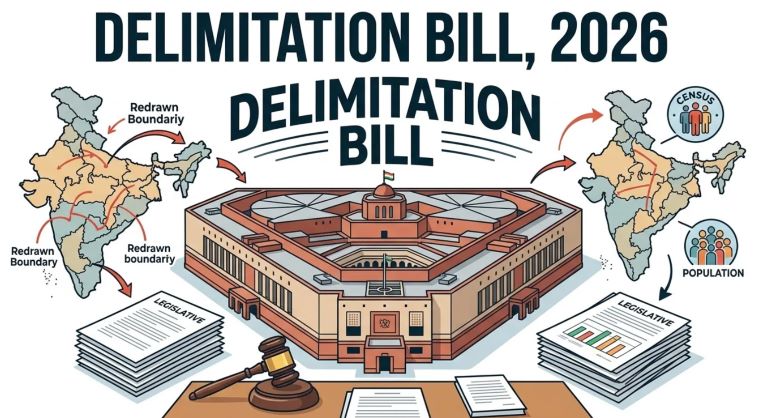
Delimitation means redrawing constituency boundaries and reallocating seats based on the latest census data.
Since parliamentary seat allocation has been frozen for decades, this process could significantly increase the number of Lok Sabha seats.
Some reports suggest the House strength may rise substantially in the coming years.
Why It Matters for 2029 Elections
The government’s stated objective is to make the reservation effective from the 2029 Lok Sabha elections.
This means:
- one-third of seats may be reserved for women
- political parties will need major candidate restructuring
- women’s representation could rise dramatically
Experts believe this may become one of the biggest electoral changes in modern Indian politics.
Political Impact
The bill has become a major political talking point.
While the ruling alliance is presenting it as a historic reform, opposition parties are questioning:
- timing
- delimitation conditions
- political motives
- state-wise seat changes
This debate is likely to remain central to national politics in the coming months.
Conclusion
The Parliament Special Session 2026 marks a defining moment for India’s democratic and constitutional future.
The Women’s Reservation Bill could reshape the political landscape by ensuring stronger representation of women, while the delimitation debate adds a deeper constitutional dimension.
As discussions continue through the three-day session, the outcome may influence not just the 2029 elections but the structure of Indian democracy for decades to come.