Singapore Blocks Anti-Indian Social Media Posts Allegedly Linked to China: A Strong Stand Against Online Hate
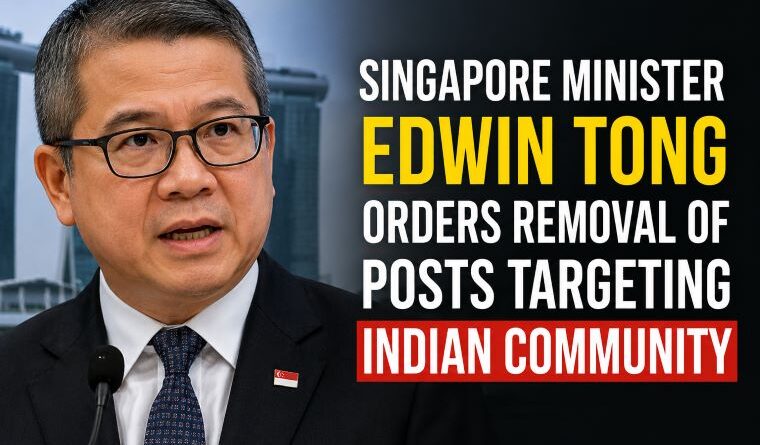
In a significant move to protect racial harmony and social cohesion, the government of Singapore has ordered major social media platforms to block access to multiple online posts targeting the Indian community. Authorities stated that the content was likely linked to a China-based platform and was designed to spread divisive narratives that undermine the nation’s multicultural identity.
The decision highlights Singapore’s increasingly firm approach toward online misinformation, foreign interference, and racial hate speech. As governments around the world grapple with the impact of social media on social stability, Singapore’s latest action is being viewed as a notable example of proactive digital governance.
Singapore Orders Platforms to Remove Anti-Indian Content
According to Singapore’s Ministry of Home Affairs (MHA), authorities directed social media giants including YouTube, Facebook, and X (formerly Twitter) to block access to 14 posts that specifically targeted the Indian community. The content allegedly promoted narratives suggesting that Singapore was being “overrun” by Indians and attempted to create racial divisions among citizens.
Investigations found that the content likely originated from a China-based online platform before being amplified across multiple websites and social media channels. Singaporean authorities described the posts as inflammatory and harmful to the country’s long-standing model of multiculturalism.
The government emphasized that any attempts to sow discord between ethnic communities would not be tolerated, regardless of whether the source is domestic or foreign.
Why the Indian Community Was Targeted
Singapore is home to a diverse population consisting primarily of Chinese, Malay, Indian, and Eurasian communities. Indians form a vital part of Singapore’s social, economic, and political fabric, contributing significantly across sectors such as technology, finance, healthcare, education, and public service.
Authorities noted that the online posts appeared designed to exploit racial sensitivities and generate resentment against the Indian population. Such narratives can be particularly dangerous in multicultural societies where social harmony depends on mutual trust and respect among communities.
Government officials warned that foreign actors increasingly use social media platforms to amplify divisive messages and influence public opinion through coordinated information campaigns.
Singapore’s Commitment to Multiculturalism
Singapore has built its national identity around multicultural coexistence since independence. The country’s policies emphasize racial and religious harmony, with strict laws against hate speech, incitement, and actions that threaten social cohesion.
Speaking about the blocked content, Singapore officials stated that the videos attacked the nation’s multiracial foundation and attempted to divide communities based on race. Authorities stressed that every community in Singapore has an equal place in society and that foreign narratives aimed at creating conflict would be rejected.
This latest action reinforces the government’s position that preserving racial harmony remains a national priority in the digital age.
Growing Concerns About Foreign Influence Operations
The incident also highlights broader concerns regarding foreign interference through digital platforms. Around the world, governments have reported coordinated online campaigns designed to influence political opinions, amplify social tensions, and spread misinformation.
Singapore has previously used legal powers to counter foreign influence campaigns. In recent years, authorities have blocked social media accounts and online content that were deemed harmful to national interests or social stability.
Experts say foreign information operations often target existing social divisions because racial and ethnic issues can generate strong emotional reactions and widespread online engagement. By exploiting these fault lines, malicious actors can increase polarization and weaken social trust.
Social Media Platforms Under Pressure
The Singapore case adds to growing global pressure on social media companies to address harmful content more effectively.
Governments in many countries have criticized platforms for failing to remove hate speech, misinformation, and coordinated influence campaigns quickly enough. Singapore has introduced several legal mechanisms that allow authorities to direct platforms to restrict access to content considered harmful to public order and social harmony.
The latest directive requires platforms to take reasonable steps to ensure Singapore-based users cannot access the identified posts.
What This Means for Digital Governance
Singapore’s response reflects a broader trend in which governments are becoming more assertive in regulating online spaces. While debates continue over freedom of expression and content moderation, many policymakers argue that online platforms must bear greater responsibility for preventing hate speech and foreign manipulation.
The incident demonstrates how digital threats are no longer limited to cybersecurity attacks. Information warfare, misinformation campaigns, and online racial incitement have become major concerns for governments seeking to protect social stability.
As artificial intelligence, social media algorithms, and cross-platform content sharing continue to evolve, authorities worldwide are likely to adopt stronger measures to detect and counter harmful online narratives.
Conclusion
Singapore’s decision to block anti-Indian social media posts sends a clear message that racial harmony remains non-negotiable. By taking swift action against content believed to originate from foreign sources, the government aims to protect social cohesion and prevent the spread of divisive narratives.
The incident also serves as a reminder of the growing challenge posed by online influence operations and the need for cooperation between governments, technology companies, and civil society to combat digital hate campaigns. As social media continues to shape public discourse, ensuring responsible online behavior will remain a critical priority for nations around the world.
FAQs
Why did Singapore block the social media posts?
Singapore blocked the posts because authorities determined they targeted the Indian community and undermined the country’s multicultural society.
How many posts were blocked?
The government ordered social media platforms to restrict access to 14 posts identified as harmful and divisive.
Which platforms were affected?
The directive was issued to YouTube, Facebook, and X (formerly Twitter).
Were the posts linked to foreign actors?
Singaporean authorities stated that investigations suggested the content likely originated from a China-based platform before spreading across other websites and social media channels.
Why is racial harmony important in Singapore?
Singapore is a multicultural nation comprising Chinese, Malay, Indian, and Eurasian communities. Maintaining racial harmony is considered essential for social stability and national unity.
Does Singapore have laws against harmful online content?
Yes. Singapore has introduced various legal frameworks that allow authorities to act against harmful online content, misinformation, foreign interference, and activities that threaten social cohesion.
What broader issue does this incident highlight?
The case highlights growing concerns over foreign influence operations, online hate campaigns, misinformation, and the role of social media platforms in moderating harmful content.