
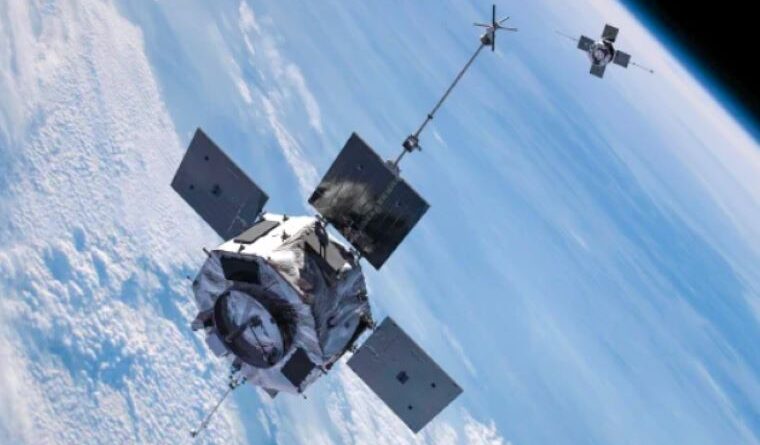
What Happens if NASA’s Satellite Crashes to Earth After 14 Years in Orbit?
NASA’s Van Allen Probes, a pair of spacecraft launched in 2012 to study Earth’s radiation belts, are expected to re-enter Earth’s atmosphere in the coming years, raising questions about what will happen if they crash down. The probes were designed to orbit Earth for several years, but due to the natural decay of their orbits over time, the end of their mission is approaching. This situation brings the potential for satellite crashes and highlights concerns around space debris management and satellite safety.
The Mission of the Van Allen Probes
The Van Allen Probes were launched to study the Van Allen radiation belts, a region of space that contains charged particles influenced by Earth’s magnetic field. The probes helped gather important data that improves our understanding of space weather and its effects on communication satellites and even electrical grids on Earth.
However, like all satellites, the Van Allen Probes are subject to the laws of orbital decay. Over time, their orbits degrade due to atmospheric drag and gravitational influences, ultimately leading to re-entry into Earth’s atmosphere.
What Happens During Re-entry?
In March 2023, NASA acknowledged that the Van Allen Probes would soon begin their descent toward Earth. When this happens, the probes will encounter the outer layers of Earth’s atmosphere. The heat generated during re-entry is immense, and most of the satellite will burn up. Satellites that are not built to survive re-entry often disintegrate completely, leaving little to no debris on Earth.
However, it’s not entirely ruled out that some parts of the probe, such as dense materials like metals, might survive the fiery re-entry and land on the surface. The likelihood of this happening is extremely low, as most spacecraft are designed to burn up upon re-entry.
Risks to Earth
Given the size and design of the Van Allen Probes—each weighing around 600 kilograms—the risk of large debris making it through the atmosphere is minimal. Even in the worst-case scenario, the parts that survive the re-entry would likely fall into the ocean or sparsely populated regions. The vast majority of the Earth’s surface is covered by water or uninhabited land, significantly reducing the potential for harm.
However, space agencies like NASA follow strict guidelines for satellite disposal to mitigate any risks. The Van Allen Probes are expected to be carefully controlled during re-entry, ensuring that they meet space debris mitigation standards.
Space Debris and Insurance Concerns
As more satellites are launched into space, the issue of space debris continues to grow. NASA has been working with insurance companies to assess the potential impact of any debris that might survive re-entry. Satellite insurers are concerned about the risks associated with satellite deorbiting, particularly if a malfunction occurs during re-entry.
To address these concerns, NASA has incorporated various mitigation techniques in the design of its satellites. These include controlled re-entry systems, which ensure that any surviving debris falls in a safe, predetermined area. In the case of the Van Allen Probes, NASA has planned for the probes to enter Earth’s atmosphere over the South Pacific Ocean, an area with minimal human activity.
A Reminder of the Growing Issue of Space Debris
The situation with the Van Allen Probes serves as a reminder of the growing issue of space debris. Over the years, various satellites, rocket stages, and other objects have accumulated in orbit around Earth. As space exploration increases, the importance of debris management and disposal will only become more critical.
International efforts are underway to develop guidelines and technologies for removing space debris and preventing collisions in orbit. Space agencies around the world are exploring ways to capture and deorbit defunct satellites to prevent them from becoming hazards.
Conclusion
While the likelihood of significant danger from the Van Allen Probes’ re-entry is minimal, the event highlights the ongoing challenges of managing space debris. As the number of satellites in orbit increases, space agencies must continue developing strategies to minimize the risks associated with satellite deorbiting and ensure that any potential satellite crashes are safely managed.