
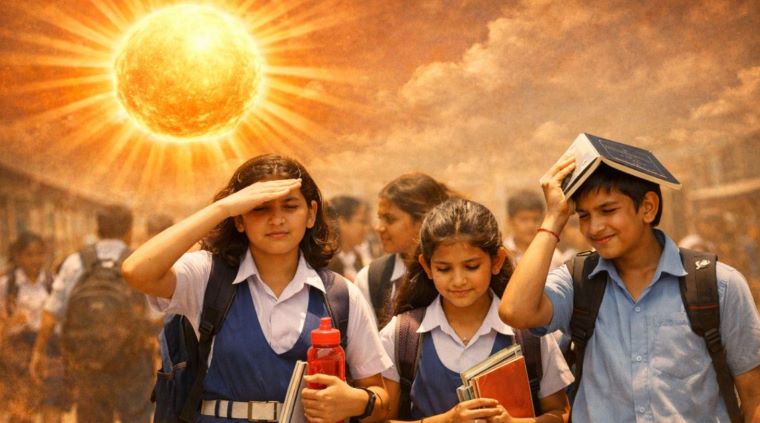
Heatwave 2026: School Holidays Announced Across India, Timings Revised in Delhi, Bihar, Odisha & More
India is currently witnessing one of the most intense early summer heatwaves 2026, forcing governments across multiple states to take urgent action. With temperatures crossing 44°C in several regions, authorities have either declared early summer vacations, shut schools temporarily, or revised school timings to protect students.
This sudden shift in the academic calendar highlights the growing impact of climate extremes on education in India.
Why Schools Are Closing Across India
The ongoing heatwave has significantly disrupted daily life, especially for school children. According to recent reports, several states have already implemented closures or revised timings due to health concerns.
Extreme heat conditions have raised risks of:
- Heatstroke
- Dehydration
- Fatigue among students
As a result, state governments are prioritizing safety over routine academic schedules.
States Where Schools Are Closed or Holidays Announced
Several states have advanced summer vacations or ordered temporary closures:
- Chhattisgarh: Summer vacation declared early from April 20 to June 15
- Odisha: Schools closed from April 27 due to severe heat
- West Bengal: Holidays started from April 22 (except hill regions)
- Tripura: Schools shut from April 24 to May 1
- Jharkhand: Temporary closures in heat-affected districts
- Dehradun (Uttarakhand): Schools closed for all classes from April 27
These decisions aim to reduce students’ exposure to extreme daytime temperatures.
Delhi-NCR, Bihar & UP: School Timings Changed
Instead of complete closures, some regions have adjusted school hours:
- In Noida and Greater Noida, schools now run from 7:30 AM to 12:30 PM
- In Bihar (Patna), younger classes end before noon, while higher classes continue till early afternoon
- Across Delhi-NCR, authorities are considering early vacations while implementing heat safety measures
Morning shifts help students avoid the peak heat hours between afternoon and evening.
Rajasthan, UP, Bihar & Odisha: Morning Classes Only
States like Rajasthan, Uttar Pradesh, Bihar, and Odisha have shifted to early morning schedules to cope with rising temperatures.
This strategy ensures:
- Reduced exposure to extreme heat
- Safer travel conditions for students
- Continuity of education with minimal disruption
Temperatures Crossing Dangerous Levels
The urgency of these decisions is driven by extreme weather conditions:
- Many regions are recording temperatures above 40–44°C
- Delhi and surrounding areas are experiencing severe heatwave conditions
- North India, including Haryana and Punjab, is witnessing temperatures nearing 45°C
The heatwave has also led to record electricity demand and health advisories across states.
Growing Trend: Early Summer Vacations in India
Experts note that early school closures due to heatwaves are becoming more common. Reports indicate that since 2022, several states have increasingly shifted academic calendars due to rising temperatures.
This reflects a broader climate pattern:
- Longer and more intense summers
- Shorter winters
- Increased frequency of extreme heat events
Impact on Students and Parents
The sudden changes are affecting:
- Academic schedules and exams
- Working parents managing childcare
- Coaching classes and extracurricular activities
However, most parents support these decisions, prioritizing children’s health and safety over routine schooling.
What Parents and Students Should Do
With conditions expected to remain severe, experts recommend:
- Staying hydrated
- Avoiding outdoor activities during peak hours
- Wearing light clothing
- Monitoring official school notifications
Schools may continue to adjust schedules depending on weather forecasts.
Conclusion
The India heatwave 2026 has triggered widespread school closures, revised timings, and early summer vacations across multiple states. While these measures may disrupt academic plans, they are essential to safeguard students from extreme weather conditions.
As climate patterns continue to evolve, such emergency responses may become a regular part of India’s education system, making adaptability crucial for both schools and families.