
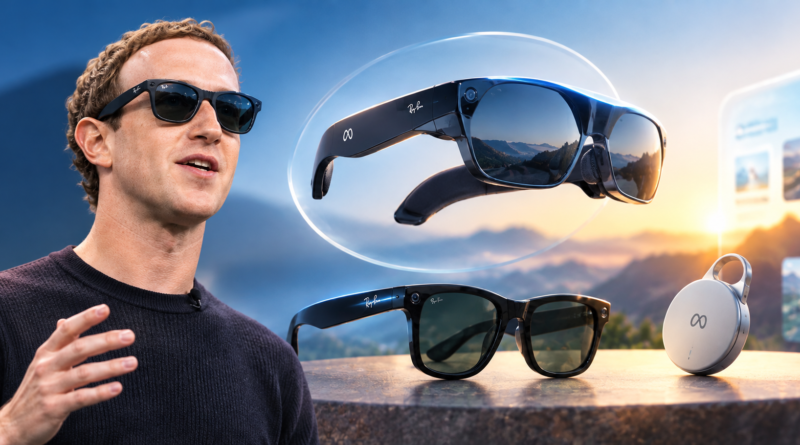
Meta Unveils $1,299 VR Glasses and Muse Charm as Zuckerberg Pushes AI Wearables
Meta is expanding its push into artificial intelligence and wearable technology with a new lineup of devices, including $1,299 Meta VR Glasses, a compact AI device called Muse Charm and new generations of Ray-Ban Meta smart glasses.
The announcements were made by Meta CEO Mark Zuckerberg at the company’s Connect 2026 event, where Meta presented its vision of making personal AI agents accessible through devices people can wear or carry rather than relying only on smartphones and computers.
The hardware push comes as Meta continues developing Muse, its personal AI agent designed to perform tasks, help users manage goals and interact with digital services. Meta says Muse will also be integrated into its AI glasses, bringing more AI functions into everyday activities.
Meta VR Glasses Priced at $1,299
The headline hardware announcement was the new Meta VR Glasses, which are scheduled to launch in spring 2027 at a starting price of $1,299.
Unlike traditional VR headsets, Meta has designed the device in a glasses-style form factor. The company says the glasses weigh about 100 grams, with computing power and the battery housed in an external device connected to the glasses.
The design is intended to provide a more immersive VR experience while reducing the size and weight placed directly on the user’s face.
Meta demonstrated the glasses for applications including gaming, watching movies, virtual displays and spatial computing. The device also supports eye tracking and hand gestures, reducing the need for conventional handheld controllers.
The glasses feature a high-resolution display and can create multiple virtual screens for work and entertainment. Meta also demonstrated virtual cinema experiences and holographic video calls as part of the device’s capabilities.
Muse Charm Brings Meta’s AI Agent Beyond the Phone
Alongside the VR glasses, Zuckerberg introduced Muse Charm, a small, keychain-sized device designed to provide quick access to Meta’s Muse AI agent.
The device is intended to let users interact with Muse without unlocking a smartphone or opening an app. Zuckerberg said the product is being developed for a holiday-season release in December, although Meta has not announced a price.
Muse Charm is designed around voice interaction and can use information from the user’s surroundings as context. Meta describes the concept as another way of accessing a personal AI agent when the user is not wearing AI glasses.
The company says it is still finalising the hardware components before the device is ready for wider release.
What Is Muse and How Does It Work?
Muse is Meta’s personal AI agent, positioned differently from a conventional chatbot.
Meta says Muse is designed to help users work toward goals, manage tasks and turn longer-term objectives into action plans. It is available through Meta’s ecosystem and is being expanded to devices such as AI glasses.
The company has also been adding capabilities that allow Muse to interact with services and help with tasks such as travel planning, reservations and other everyday activities.
With Muse coming to AI glasses, Meta wants users to access these capabilities while keeping their phones in their pockets.
Ray-Ban Meta Audio: Camera-Free Smart Glasses
Meta also introduced Ray-Ban Meta Audio, its first AI glasses without cameras.
The new glasses start at $349 and are designed around audio, calls and AI interaction. Meta says they weigh approximately 43 grams and are designed for all-day use. The glasses are expected to become available in October.
The camera-free design also distinguishes the product from Meta’s existing camera-equipped smart glasses.
Meta says the new glasses can be used for listening to music, making calls, translating conversations and interacting with Meta AI. The company is positioning the product as a way to bring AI and audio capabilities into ordinary eyewear without adding a camera.
Ray-Ban Meta Gen 3 Gets Thinner and More Powerful
Meta also announced the next generation of its camera-equipped Ray-Ban Meta glasses.
The new Ray-Ban Meta Gen 3 starts at $449 and features slimmer designs, longer battery life and a new customisable action button for accessing Meta AI. Meta says the new range will be available in 27 colour and lens combinations, including Wayfarer, Aviator and Zena styles.
Meta is also expanding its overall AI glasses portfolio. The company says it expects to offer more than 100 different glasses options across Ray-Ban, Oakley and Meta Glasses by the end of 2026.
Meta Is Moving AI From Screens to Wearables
The latest announcements show how Meta is connecting its AI strategy with hardware.
Instead of limiting AI interaction to phones and computers, the company is building an ecosystem in which users can communicate with AI through glasses and smaller wearable devices.
Meta’s AI glasses can already provide information such as sports scores, restaurant recommendations and live translation. The integration of Muse is intended to expand those capabilities by giving the glasses access to a more proactive AI agent.
This also gives Meta another hardware category through which its AI services can become part of everyday routines.
Why the Muse Strategy Is Getting Attention
The Bloomberg opinion piece you shared frames Muse and Meta’s AI hardware strategy as potentially comparable to an “iPod moment” for the company. That is an opinion-based interpretation rather than an established outcome, but it reflects the broader question surrounding Meta’s latest hardware push: whether AI wearables can become a mainstream consumer category.
Meta is attempting to combine three elements — artificial intelligence, wearable hardware and its existing ecosystem of apps and services.
The company’s strategy also moves beyond traditional virtual reality. While the $1,299 Meta VR Glasses continue Meta’s VR efforts, the Ray-Ban line and Muse are aimed at more everyday interactions.
Meta’s Broader AI Hardware Strategy
The announcements come as Meta continues investing heavily in AI agents.
Meta says its long-term goal is to make personal AI agents capable of helping people with everyday tasks while being accessible across different devices. Muse is therefore not being presented simply as another chatbot but as a system that can work across applications and hardware.
The company’s growing range of glasses also suggests that Meta sees wearables as an important interface between people and AI.
For consumers, the latest announcements create several different options: traditional camera-equipped smart glasses, camera-free audio glasses, display-equipped AI glasses and the more immersive Meta VR Glasses.
What Meta Announced at Connect 2026
Here are the key hardware announcements:
| Product | Starting Price | Availability |
| Meta VR Glasses | $1,299 | Spring 2027 |
| Ray-Ban Meta Audio | $349 | October 2026 |
| Ray-Ban Meta Gen 3 | $449 | 2026 |
| Muse Charm | Not announced | Targeted for December 2026 |
Meta has not yet announced pricing for Muse Charm. The company is targeting the holiday season for its release.
The Bigger Picture
Meta’s latest hardware announcements represent a broader shift in how the company wants people to interact with AI.
The $1,299 Meta VR Glasses are aimed at immersive computing, while Ray-Ban Meta Audio focuses on everyday audio and AI without a camera. The Muse Charm takes the personal AI concept into a small, standalone device.
Meanwhile, Meta is bringing Muse directly to its AI glasses, potentially allowing users to interact with an AI agent throughout the day without constantly reaching for a smartphone.
Whether these devices become mainstream remains to be seen. For now, Meta is clearly expanding beyond smartphones and traditional VR headsets and is building a wider hardware ecosystem around personal AI.