
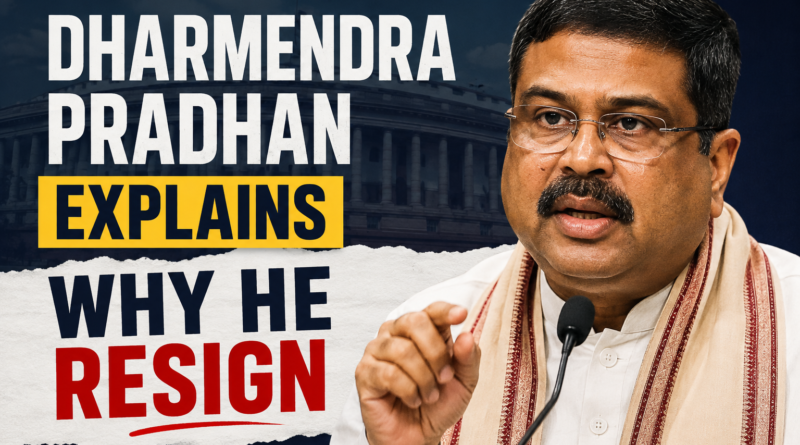
Dharmendra Pradhan Explains Why He Resigned
Former Union Education Minister Dharmendra Pradhan has broken his silence on his resignation, saying that attempts were made to “mislead” Generation Z during protests linked to the NEET paper leak controversy.
Speaking to students and teachers in Bhubaneswar, Pradhan explained that he had personally approached Prime Minister Narendra Modi and offered to resign from his position. His comments came around two weeks after he stepped down as Education Minister.
Pradhan said the decision was connected to the situation surrounding the examination controversy and the growing student protests.
“Attempts Were Made to Mislead Gen Z”
One of the key points in Pradhan’s statement was his reference to India’s younger generation.
According to reports, the former minister said that some people attempted to mislead Gen Z during the protests. He described Gen Z as an important force whose aspirations and determination cannot be ignored.
His comments come after weeks of student-led protests surrounding examination-related concerns and allegations of irregularities.
The issue gained wider attention as young protesters increasingly used social media to organise and voice their demands.
Pradhan Says He Offered His Resignation to PM Modi
Pradhan said he approached Prime Minister Narendra Modi and offered to resign.
He indicated that he believed the Education Ministry needed to respond to the concerns that had emerged around the examination system and the protests.
His resignation came amid a period of intense political and public pressure over the NEET controversy.
The former minister’s latest remarks represent his first major public explanation of why he decided to leave the post.
NEET Controversy Became a Major Flashpoint
The controversy surrounding NEET and examination integrity became a major source of concern among students and parents.
Student groups raised questions about alleged paper leaks, examination irregularities and the credibility of the examination system. The issue eventually developed into broader protests demanding accountability and reforms.
The protests also became increasingly associated with India’s Gen Z population, with social media playing a major role in mobilising young people.
Why Gen Z Became Central to the Debate
Pradhan’s remarks specifically highlighting Gen Z reflect the changing nature of student activism in India.
Unlike traditional student movements, today’s young protesters can quickly organise through platforms such as social media and communicate their concerns to millions of people.
The recent protests demonstrated how examination-related grievances can quickly become a wider public debate when large numbers of students and young people participate.
Pradhan has emphasised that India’s youth should not be underestimated and that their aspirations and energy are significant for the country’s future.
Political Reactions to Pradhan’s Statement
Pradhan’s comments have also triggered political reactions.
Opposition leaders and groups have questioned his explanation, particularly his suggestion that Gen Z protesters may have been misled.
The Congress has pushed back against the claim, arguing that the students involved in the protests were expressing genuine concerns rather than simply acting under someone else’s influence.
The debate has therefore shifted from the resignation itself to broader questions about how political leaders should respond to youth-led protests.
What Happens Next for Examination Reforms?
The controversy has also intensified calls for changes to India’s examination system.
The government has already indicated the need for reforms aimed at improving examination security, transparency and public confidence.
The wider debate is now focused on how examination agencies can prevent leaks and irregularities while ensuring that students are not unfairly affected by administrative failures.
For millions of students preparing for competitive examinations, maintaining trust in the examination system remains a major concern.
Dharmendra Pradhan’s Message to Young People
While explaining his resignation, Pradhan also highlighted the importance of India’s young population.
His remarks suggest that the government and political leadership need to pay closer attention to the concerns and aspirations of Gen Z.
The former minister’s statement comes at a time when young Indians are increasingly using digital platforms to raise issues related to education, employment and public accountability.
Conclusion
Dharmendra Pradhan has offered his first detailed explanation of his resignation as Union Education Minister, saying that attempts were made to mislead Gen Z during the protests surrounding the NEET controversy.
He said he had approached Prime Minister Narendra Modi and offered to step down, while also stressing the importance of India’s young generation.
The statement has sparked a fresh political debate, with critics questioning the suggestion that student protesters were misled. As the discussion continues, the larger issue remains the need to restore confidence in India’s examination system and address the concerns of students.
Frequently Asked Questions
Why did Dharmendra Pradhan resign as Education Minister?
Pradhan said he offered his resignation to Prime Minister Narendra Modi amid the controversy surrounding examinations and the protests that followed.
What did Dharmendra Pradhan say about Gen Z?
He said attempts had been made to mislead Gen Z during the protests and described young people as an important force whose aspirations cannot be ignored.
Where did Pradhan explain his resignation?
He made the remarks while interacting with students and teachers in Bhubaneswar.
Why did the NEET controversy lead to protests?
Students raised concerns about alleged examination irregularities and the integrity and transparency of the examination process.
What is the larger issue now?
The controversy has renewed calls for stronger examination systems, greater transparency and reforms to prevent irregularities from affecting students.