
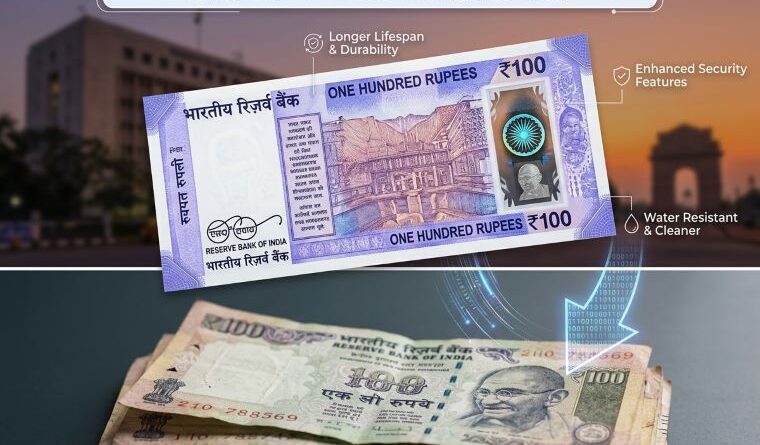
India May Introduce Plastic Currency Notes: How Polymer Banknotes Could Transform the Future of Cash
India may soon witness one of the biggest changes in its currency system in decades. Reports suggest that the Reserve Bank of India (RBI) is considering reviving its long-pending plan to introduce polymer or plastic currency notes. The move comes amid rising currency demand, increasing printing costs, and the need for stronger anti-counterfeiting measures. A pilot project for polymer notes is reportedly under consideration, bringing back an idea first discussed over a decade ago.
What Are Polymer Banknotes?
Polymer banknotes are currency notes made from a special type of plastic called biaxially oriented polypropylene (BOPP), rather than traditional cotton-based paper. These notes were first developed in Australia and have since been adopted by several countries, including Canada, the United Kingdom, New Zealand, Singapore, and Romania.
Unlike paper notes, polymer banknotes are more durable, resistant to moisture, and less prone to wear and tear. They can also incorporate advanced security features that make counterfeiting significantly more difficult.
Why Is RBI Considering Polymer Notes Again?
India’s cash economy remains strong despite the rapid growth of digital payments. According to recent reports, currency circulation continues to rise, increasing the burden of printing and replacing worn-out banknotes. The cost of printing paper currency has also climbed substantially in recent years.
Experts believe polymer notes could help address several challenges:
1. Longer Lifespan
Polymer banknotes generally last two to five times longer than paper notes. Since they are more resistant to folding, tearing, dirt, and moisture, they remain in circulation for longer periods before needing replacement.
2. Lower Long-Term Costs
Although polymer notes are more expensive to produce initially, their extended lifespan reduces replacement frequency. Over time, this can lower the overall cost of currency management for central banks.
3. Better Security Features
Counterfeit currency remains a concern for monetary authorities worldwide. Polymer banknotes can incorporate transparent windows, holographic elements, micro-printing, and specialized inks that are difficult to replicate. These features significantly improve currency security.
4. Improved Hygiene
Plastic notes absorb less moisture and dirt compared to paper notes. This makes them easier to clean and more hygienic, a factor that gained importance during and after the COVID-19 pandemic.
India’s Earlier Experiment with Polymer Currency
The idea of polymer banknotes is not new in India. The RBI had announced plans in the past to test plastic currency on a pilot basis, particularly in selected denominations. However, the project did not progress into full-scale implementation. Recent reports indicate that the central bank is revisiting the proposal due to changing economic conditions and technological advancements in currency production.
If approved, India could initially launch polymer notes in select denominations and regions before deciding on a nationwide rollout.
Which Countries Already Use Plastic Currency?
Polymer banknotes have become increasingly common around the world. Countries that have either fully or partially adopted polymer currency include:
- Australia
- Canada
- United Kingdom
- New Zealand
- Singapore
- Malaysia
- Vietnam
- Romania
- United Arab Emirates
- Thailand
Many of these countries report lower replacement costs, better durability, and stronger protection against counterfeiting after transitioning to polymer notes.
Challenges of Switching to Polymer Notes
Despite their advantages, polymer banknotes are not without challenges.
Higher Initial Production Costs
Manufacturing polymer notes requires specialized materials and printing technology, making initial production more expensive than traditional paper currency.
Recycling Concerns
While polymer notes last longer, end-of-life recycling and disposal require dedicated processes. Governments must establish systems to handle used polymer currency sustainably.
Public Adaptation
A shift from paper to plastic currency would require public awareness campaigns. Citizens, businesses, banks, and ATM operators would need time to adapt to the new notes.
Will Polymer Notes Replace Paper Currency Completely?
At this stage, there is no official confirmation that India will completely replace paper currency. Analysts believe the RBI is more likely to adopt a phased approach, starting with a pilot project and evaluating its results before making a broader decision.
Interestingly, recent reports also indicate that the RBI is exploring varnished banknotes with enhanced durability and security features. This suggests the central bank is examining multiple options to improve the lifespan and security of Indian currency.
The Future of Cash in India
Even as UPI and digital payments continue to grow rapidly, cash remains an essential part of India’s economy, particularly in rural and semi-urban regions. The introduction of polymer banknotes could represent a major modernization step for India’s currency system, combining durability, security, and cost efficiency.
If the RBI proceeds with a pilot project, India could join the growing list of nations embracing plastic currency technology. The coming months may determine whether polymer notes become a permanent feature of the Indian rupee ecosystem or remain an experimental initiative.
As the demand for secure and long-lasting currency increases, polymer banknotes may well represent the future of physical cash in India.