
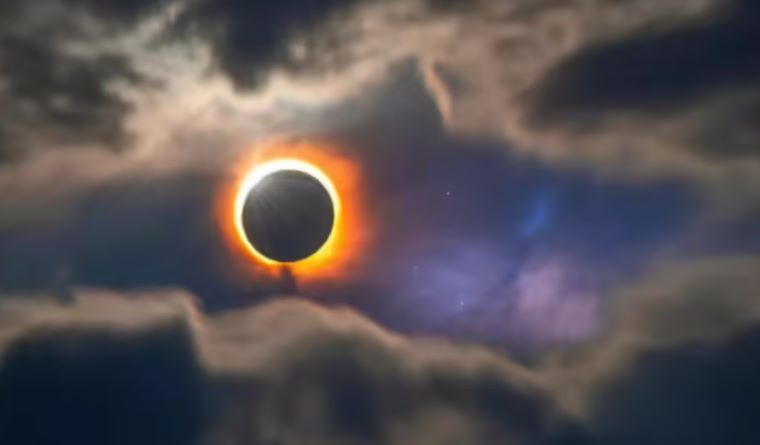
Longest Solar Eclipse of the Century in 2027: Date, Timing, Visibility & Key Details
A rare astronomical event is set to capture global attention in 2027—a total solar eclipse expected to be the longest of the century. Skywatchers, scientists, and space enthusiasts are already looking forward to this once-in-a-lifetime phenomenon.
What Is Happening in 2027?
On August 2, 2027, the world will witness an extraordinary solar eclipse, where the Moon completely covers the Sun for an extended duration.
This event is being called the longest total solar eclipse of the 21st century, with totality lasting up to 6 minutes and 23 seconds in some regions.
What Is a Solar Eclipse?
A solar eclipse occurs when the Moon passes between the Earth and the Sun, blocking sunlight either partially or completely.
During a total solar eclipse:
- The sky darkens like twilight
- The Sun’s outer atmosphere (corona) becomes visible
- Temperatures may drop slightly
This rare alignment creates one of the most stunning natural spectacles.
Where Will It Be Visible?
The 2027 eclipse will be visible across multiple regions, including:
- Parts of Europe (Spain, Gibraltar)
- North Africa (Morocco, Egypt, Libya)
- Middle East (Saudi Arabia, Yemen)
These locations will experience full totality, making them prime viewing destinations.
Will the Eclipse Be Visible in India?
In India, the eclipse will not be fully visible as a total solar eclipse.
- Some regions may experience a partial eclipse
- Visibility will depend on location and timing
For the best experience, observers may need to travel to regions within the path of totality.
Why Is This Eclipse So Special?
This eclipse stands out due to several factors:
1. Longest Duration
With totality lasting over 6 minutes, it will be the longest eclipse of this century.
2. Rare Alignment
The Earth, Moon, and Sun will align in a way that maximizes eclipse duration.
3. Limited Opportunity
Such long eclipses are extremely rare and may not occur again for decades.
Safety Tips for Viewing the Eclipse
Looking directly at the Sun during an eclipse can damage your eyes. Follow these precautions:
- Use certified solar eclipse glasses
- Avoid regular sunglasses—they are not safe
- Use indirect viewing methods like pinhole projection
- Never look at the Sun through a camera or telescope without proper filters
Cultural and Scientific Significance
Solar eclipses have fascinated humans for centuries.
- In science, they help study the Sun’s corona and space weather
- In culture, they are often linked with traditions and beliefs
In India, eclipses (Surya Grahan) hold religious importance, and many people follow rituals during the event.
How to Prepare for the Event
If you plan to watch the eclipse:
- Check exact timings closer to the date
- Choose a clear viewing location
- Arrange proper viewing equipment
- Consider traveling to a totality zone for the full experience
Conclusion
The 2027 solar eclipse is shaping up to be one of the most spectacular celestial events of our time.
With its record-breaking duration and wide visibility, it offers a rare chance to witness the beauty of the universe in action.
Whether you watch it from India or travel abroad for a complete view, this event is something you won’t want to miss.