
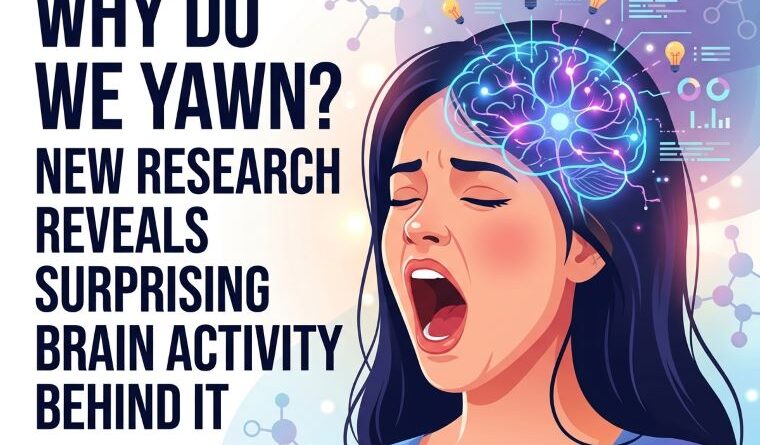
Why Do We Yawning? New Research Reveals Surprising Brain Activity Behind It
Yawning is something we all do—whether we’re tired, bored, or even just seeing someone else yawn. But new scientific research suggests that yawning is far more than a simple reflex. In fact, it may play an important role in how our brain functions.
Recent studies using advanced brain imaging have uncovered surprising insights into what actually happens when we yawn—and the results could change how we understand brain health.
What Happens in the Brain When You Yawn?
Scientists using MRI scans have found that yawning activates specific regions of the brain linked to:
- Awareness
- Social behavior
- Emotional processing
One key area involved is the precuneus, a part of the brain associated with consciousness and self-reflection.
This suggests that yawning is not just about sleepiness—it may be connected to how alert or mentally engaged we are.
Yawning May Help Regulate Brain Temperature
One of the leading scientific theories is that yawning helps cool down the brain.
Here’s how it works:
- When you yawn, you take a deep breath
- This increases blood flow and oxygen intake
- The process may help reduce brain temperature
A cooler brain can function more efficiently, improving focus and alertness.
Why Is Yawning Contagious?
Have you ever started yawning just by seeing someone else do it?
This is known as contagious yawning, and it may be linked to empathy and social bonding.
Research suggests that:
- People are more likely to “catch” yawns from those they feel emotionally connected to
- It may involve mirror neurons—cells that help us mimic others’ actions
This makes yawning not just a biological act, but also a social behavior.
Could Yawning Help Detect Brain Disorders?
Interestingly, scientists believe yawning could play a role in studying neurological conditions.
Some research indicates that unusual yawning patterns may be linked to:
- Neurodegenerative diseases
- Brain injuries
- Disorders affecting consciousness
By studying yawning, researchers may gain insights into conditions like Alzheimer’s or Parkinson’s in the future.
Yawning in Animals: Not Just a Human Habit
Yawning is not unique to humans—it is seen across many species, including reptiles.
For example, a viper was recently observed yawning, revealing its long fangs. In animals, yawning can serve different purposes such as:
- Regulating body temperature
- Signaling behavior or mood
- Stretching jaw muscles
Common Reasons Why We Yawn
While science continues to explore deeper explanations, everyday triggers include:
- Lack of sleep
- Boredom or low stimulation
- Changes in brain activity
- Seeing or thinking about yawning
Is Yawning a Sign of a Problem?
In most cases, yawning is completely normal.
However, excessive yawning may sometimes indicate:
- Fatigue
- Stress
- Sleep disorders
- Rare neurological issues
If yawning becomes unusually frequent or uncontrollable, it may be worth consulting a medical professional.
The Bigger Picture
Yawning might seem simple, but it reflects complex brain processes involving:
- Temperature regulation
- Social interaction
- Cognitive function
What was once considered a basic reflex is now being studied as a window into brain health.
Conclusion
Yawning is more than just a sign of tiredness—it is a fascinating biological function with deep connections to the brain.
From activating areas like the precuneus to potentially helping scientists understand neurological diseases, yawning continues to reveal new secrets.
So the next time you yawn, remember:
Your brain might be doing more work than you think.