
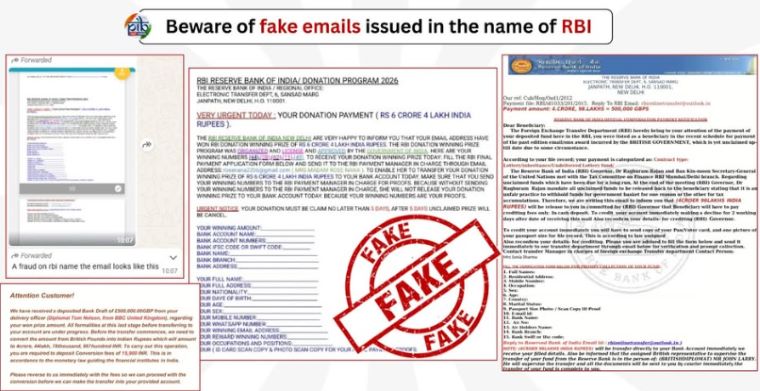
RBI Fake Email Scam Alert: PIB Fact Check Warns Public Against Fraud Messages
Reserve Bank of India and the government’s PIB Fact Check unit have warned citizens about fake emails circulating in the name of the RBI that falsely promise donation money, lottery rewards, or large financial transfers.
Authorities have clarified that these emails are fraudulent and are part of an “advance fee scam” designed to cheat people by collecting money or personal information.
What Is The RBI Fake Email Scam?
According to reports, scammers are sending emails claiming that recipients have:
- won a lottery
- received a donation
- been selected for financial aid
- become eligible for large fund transfers
The fake messages often use the name and logo of the Reserve Bank of India to appear authentic.
Victims are then asked to:
- pay processing fees
- share banking details
- submit identity documents
- transfer “verification charges”
before supposedly receiving the promised amount.
PIB Fact Check Issues Warning
PIB Fact Check has officially warned that these emails are fake and should not be trusted.
Officials clarified:
RBI does not send lottery, donation, or reward emails asking for fees.
Citizens have been advised not to:
- click suspicious links
- share OTPs
- reveal account details
- send money to unknown accounts
in response to such emails.
What Is An Advance Fee Scam?
The fraud is being described as an:
“advance fee scam”
In this type of scam:
- victims are promised a large reward
- scammers demand small upfront payments
- victims continue paying additional “charges”
- the promised money never arrives
Such scams commonly use:
- fake bank names
- forged government logos
- fake RBI documents
- fraudulent signatures
to appear genuine.
How To Identify Fake RBI Emails
Authorities say people should watch for warning signs such as:
- unrealistic prize claims
- urgent payment demands
- poor grammar or spelling
- suspicious email addresses
- requests for confidential banking information
The Reserve Bank of India does not:
- distribute lottery winnings
- offer random donation money
- ask individuals to pay fees for fund release
through unofficial emails.
Why Online Financial Scams Are Increasing
Cyber fraud experts say financial scams are increasing because:
- digital payments are growing rapidly
- scammers use AI-generated documents
- fake branding appears convincing
- people respond quickly to financial offers
Fraudsters also exploit:
- fear
- urgency
- greed
- trust in official institutions
to manipulate victims.
Common Tricks Used By Scammers
Fraud emails often include:
- fake RBI letterheads
- forged signatures
- fake approval certificates
- international transfer claims
- “confidential” notices
Some messages may even threaten:
- account suspension
- legal action
- transaction cancellation
to pressure victims into quick action.
What To Do If You Receive Such Emails
Cybersecurity experts recommend:
- deleting suspicious emails immediately
- avoiding unknown attachments
- verifying claims through official RBI channels
- reporting fraud attempts to cybercrime authorities
People should also avoid forwarding such messages to others.
How To Stay Safe Online
To reduce fraud risks:
- never share OTPs
- use strong passwords
- enable two-factor authentication
- verify sender email addresses carefully
- avoid clicking unknown links
Users should always confirm financial communications through official websites.
RBI Frequently Warns About Fraud
Reserve Bank of India regularly issues public advisories warning against:
- fake lottery scams
- KYC frauds
- phishing attacks
- fake banking calls
- investment scams
The central bank repeatedly reminds citizens that official institutions do not request confidential banking information through random emails or messages.
Why Fact Checks Matter
Government fact-checking initiatives have become increasingly important as fake financial messages spread rapidly on:
- Telegram
- social media platforms
Quick verification helps prevent panic, misinformation, and financial losses.
Conclusion
The latest fake RBI email scam serves as another reminder that cyber fraudsters continue targeting people using fake financial promises and official-looking messages.
Authorities have clearly confirmed that the RBI is not distributing lottery winnings, donation money, or rewards through emails demanding processing fees.
Citizens are advised to remain cautious, verify suspicious claims carefully, and avoid sharing personal or banking information with unknown sources online.