
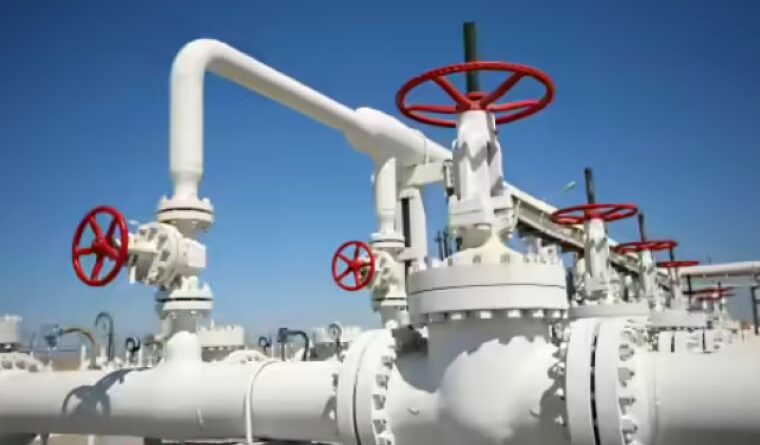
Northeast India’s Untapped Natural Gas Reserves Worth ₹13,000 Crore Remain Stranded Amid Pipeline Connectivity Issues
India’s northeastern region possesses significant natural gas reserves that could play a major role in strengthening the country’s energy security and supporting the transition toward cleaner fuels. However, industry experts and energy companies warn that regulatory hurdles and inadequate pipeline connectivity are preventing these resources from reaching consumers and industries across the nation.
According to industry estimates, natural gas worth nearly ₹13,000 crore remains stranded in the Northeast due to the absence of interconnected pipeline infrastructure. Despite abundant gas production in states such as Assam, Arunachal Pradesh, and Tripura, a large portion of the available gas cannot be efficiently transported to high-demand markets in other regions of India.
The issue has prompted energy companies to seek urgent intervention from the Petroleum and Natural Gas Regulatory Board (PNGRB), calling for reforms that would enable seamless integration of regional gas networks with the national pipeline grid.
Why Northeast India’s Natural Gas Remains Underutilized
The northeastern region is one of India’s oldest hydrocarbon-producing areas. Several oil and gas fields have been operating in Assam and neighboring states for decades. However, unlike western and northern India, the region’s gas pipeline infrastructure remains fragmented.
Many existing pipelines were developed to serve local industries and power plants rather than connect to the broader national gas transmission network. As a result, gas producers often face limitations in transporting surplus production to consumers outside the region.
Industry stakeholders argue that without adequate interconnectivity, gas-rich states are unable to fully monetize their resources, while consumers elsewhere continue to face supply shortages and higher transportation costs.
Energy Companies Seek PNGRB Intervention
Energy firms have urged the Petroleum and Natural Gas Regulatory Board to facilitate the interconnection of pipeline networks operating in the Northeast. Industry representatives believe that regulatory approval for pipeline integration would unlock significant economic value and improve utilization rates.
The demand centers on allowing operational flexibility between different pipeline systems so that gas can flow freely based on market demand. Experts say that such connectivity would help eliminate bottlenecks and encourage greater investment in upstream exploration and production activities.
The industry has emphasized that creating a unified gas transportation network aligns with India’s broader vision of increasing natural gas’s share in the national energy mix.
Economic Impact of Stranded Gas Reserves
The inability to transport surplus gas has created substantial economic losses for producers and governments. Estimates suggest that stranded reserves represent potential revenues of approximately ₹13,000 crore that remain unrealized due to infrastructure constraints.
Beyond direct revenue losses, the issue also affects employment generation, industrial growth, and regional development. Increased gas utilization could support fertilizer plants, power generation facilities, manufacturing industries, and city gas distribution networks across multiple states.
Experts note that improving gas evacuation infrastructure would not only benefit producers but also contribute to lower energy costs and enhanced energy availability for consumers.
Strategic Importance for India’s Energy Security
India remains heavily dependent on imported crude oil and liquefied natural gas (LNG) to meet growing energy demand. Maximizing domestic gas production is considered a key component of the country’s long-term energy strategy.
The Northeast’s untapped gas resources offer an opportunity to reduce import dependence while supporting cleaner energy alternatives. Natural gas produces fewer emissions than coal and oil, making it an important transition fuel as India works toward its climate and sustainability goals.
Industry analysts believe that integrating northeastern gas supplies into the national network could improve supply diversification and strengthen resilience against global energy market disruptions.
Infrastructure Development Remains Crucial
The government has already invested in several projects aimed at expanding gas infrastructure in the region. Major initiatives include the Indradhanush Gas Grid and other pipeline expansion projects designed to improve connectivity among northeastern states.
However, experts argue that physical infrastructure alone is not sufficient. Regulatory clarity, operational coordination, and network interoperability are equally important to ensure efficient gas transportation.
Stakeholders have called for faster approvals and policy measures that encourage collaboration among pipeline operators, gas producers, and distributors.
Future Outlook for Northeast Gas Sector
The long-term outlook for Northeast India’s gas sector remains positive. Rising domestic demand for cleaner fuels, expansion of city gas distribution networks, and increasing industrial consumption are expected to create significant market opportunities.
If connectivity challenges are addressed, the region could emerge as a major contributor to India’s natural gas ecosystem. Enhanced pipeline integration would improve resource utilization, attract fresh investments, and create new economic opportunities across the Northeast.
Energy experts believe that resolving the current regulatory and infrastructure bottlenecks could unlock billions of rupees in value while helping India achieve its energy security and sustainability objectives.
As policymakers evaluate industry requests, the future of Northeast India’s natural gas reserves may depend on how quickly regulatory reforms and pipeline integration efforts move forward.
FAQs
1. Why is natural gas in Northeast India considered stranded?
Natural gas remains stranded because pipeline infrastructure in the region is not fully connected to India’s national gas transportation network.
2. How much gas value is estimated to be stranded?
Industry estimates suggest that natural gas worth approximately ₹13,000 crore remains underutilized due to connectivity constraints.
3. Which states in Northeast India have major gas reserves?
Assam, Tripura, and Arunachal Pradesh are among the key states with significant natural gas resources.
4. What is PNGRB?
The Petroleum and Natural Gas Regulatory Board (PNGRB) is India’s regulator responsible for overseeing natural gas transportation and distribution infrastructure.
5. Why are energy companies seeking pipeline interconnection?
Pipeline interconnection would allow gas to move more efficiently between networks, improving supply flexibility and market access.
6. How could pipeline connectivity benefit consumers?
Better connectivity can increase gas availability, improve supply reliability, and potentially reduce transportation-related costs.
7. What role does natural gas play in India’s energy transition?
Natural gas is considered a cleaner-burning fuel than coal and oil and is viewed as a transition fuel in India’s move toward lower-carbon energy sources.
8. What is the Indradhanush Gas Grid?
The Indradhanush Gas Grid is a major infrastructure project aimed at connecting northeastern states through an integrated natural gas pipeline network.
9. How does stranded gas affect the economy?
It results in lost revenues, reduced industrial growth opportunities, lower investment potential, and underutilization of domestic energy resources.
10. What could happen if connectivity issues are resolved?
India could unlock billions of rupees in economic value, improve energy security, reduce import dependence, and accelerate regional development in the Northeast.